


Custom Furniture Made in USA: A Buyer's Guide

For buyers searching for custom furniture made in USA, the real question is not simply where a piece was assembled. It is how thoughtfully the piece was designed, who shaped it, which materials went into it, and whether the finished furniture will serve the room for years. Nativa Interiors brings those questions together through custom furniture, interior design, curated retail, and a North American artisan manufacturing network built around the client.
Explore Nativa Interiors custom furniture options and start a consultation.
What does custom furniture made in USA actually mean?
Custom furniture made in USA generally refers to furniture designed, specified, or manufactured in the United States with a meaningful level of domestic production. The phrase can describe a fully original commission, a made-to-order piece adapted from an established design, or a product assembled domestically from a combination of domestic and imported components. Because the label can cover several production models, buyers should ask precise questions before treating it as a guarantee of a particular construction standard.
For a luxury furniture purchase, country of origin is one part of the evaluation. A better assessment also considers the design brief, frame or case construction, joinery, upholstery work, material sourcing, finish quality, quality-control process, and the support available after delivery. A well-made piece should be appropriate to the way a client lives, not just attractive in a photograph.
Nativa Interiors' documented differentiator is its integrated model: the company combines a curated furniture showroom, custom-furniture services, residential and commercial interior design, and access to more than 200 North American artisans. That combination gives clients a place to discuss the room, the furniture, the materials, and the installation as one connected project rather than as separate purchases.
Custom, semi-custom, and bespoke furniture: what is the difference?
Custom furniture is usually based on an existing design that can be adjusted to suit a room, lifestyle, or aesthetic. A client may select the dimensions, upholstery, finish, cushion comfort, configuration, or hardware while retaining the character of the original collection. This approach offers meaningful personalization without requiring every detail to be invented from a blank page.
Semi-custom furniture typically offers a defined menu of modifications. It may be the right choice when a buyer needs a different fabric, finish, or size but does not need a new silhouette or completely original engineering. Bespoke furniture generally begins with a more open-ended design brief and may involve original drawings, prototypes, unusual dimensions, or one-off fabrication.
The terms overlap in everyday furniture marketing, so the useful question is not which label sounds most exclusive. Ask what can actually be changed, who approves the specifications, how the piece will be built, and how the design team will confirm that the result fits the room. Nativa's existing guide to custom versus bespoke furniture covers the terminology in greater detail. This article focuses on the broader buyer decision: how to evaluate an American-made or North American-made custom furniture program.
Why choose custom furniture for a luxury home?
Custom furniture earns its place when an off-the-shelf piece solves only part of the problem. In a luxury home, the furniture may need to fit a difficult wall, align with architectural details, support a particular way of sitting, coordinate with existing pieces, or carry a room's visual language from one space to the next.
- Better proportions: A sofa, console, dining table, or bed can be specified around the room's measurements instead of forcing the room to accommodate a standard size.
- More considered comfort: Seat depth, cushion fill, arm height, upholstery, and support can be selected with the client's posture and habits in mind.
- Material continuity: Wood species, stain, metal, leather, and fabric can connect a custom piece to flooring, cabinetry, art, and architectural finishes.
- Functional specificity: A cabinet can solve a storage need, a dining table can serve a precise number of guests, and a sectional can work around circulation paths or views.
- Design coherence: A design professional can coordinate custom pieces with lighting, rugs, accessories, and the rest of the interior rather than treating each item as an isolated purchase.
- Longer-term relevance: A piece designed for the client's actual home and routines is less likely to feel like a temporary compromise.
The benefit is not customization for its own sake. The benefit is a more intentional relationship between the furniture, the architecture, and the people who use the space.
How is American-made custom furniture built?
The exact process varies by furniture category and manufacturer, but quality custom furniture follows a sequence of decisions. The visible result is the final finish and upholstery. The lasting value is often determined earlier, when the design is measured, the materials are selected, and the construction details are reviewed.
1. Start with the room and the brief
A strong project begins with the room rather than a product name. The design team considers measurements, doorways, stairways, windows, sightlines, traffic patterns, lighting, existing furniture, and the daily routines the piece must support. For a residential project, that may mean planning a conversation area that works for both quiet mornings and larger gatherings. For a commercial project, it may mean balancing durability, brand character, accessibility, and installation logistics.
2. Select the silhouette and dimensions
Once the brief is clear, the client can choose an established collection or develop a more specific direction. Dimensions matter as much as style. A dining table may need to leave generous room for chairs and circulation. A sofa may need a tailored depth for a formal living room instead of a deep lounge profile. A console may need to clear a walkway while still providing useful surface area.
3. Specify materials and finishes
Material selection affects appearance, comfort, maintenance, and longevity. Wood species and finish change how a case good responds to light. Leather develops a different character from woven upholstery. Performance fabrics may be appropriate for a heavily used family room, while a more delicate textile may suit a lower-traffic formal setting. The right choice depends on the room and the client's priorities, not on a universal ranking of materials.
4. Review construction and craftsmanship
Ask how the piece is constructed and what quality checks occur before delivery. On upholstered furniture, useful questions include frame materials, joinery, suspension, cushion construction, seam placement, and the way patterns are matched. On wood furniture, ask about the material, joinery, drawer or door operation, finish, and how natural variation will be handled. A custom designation should lead to a clear conversation about the work behind the piece.
5. Confirm the final details before fabrication
Before production begins, the client and design team should confirm the dimensions, finish, upholstery, configuration, and any special requirements. This is where an experienced partner adds value. The goal is to catch a clearance issue, a proportion concern, or a material mismatch before the item reaches the workshop.
6. Coordinate delivery and installation
Custom furniture is not finished when fabrication ends. Delivery routes, entry conditions, protection of the home, placement, and final inspection all shape the experience. A showroom and design partner that understands the whole process can help coordinate the piece with the surrounding project.
What should you look for in custom furniture craftsmanship?
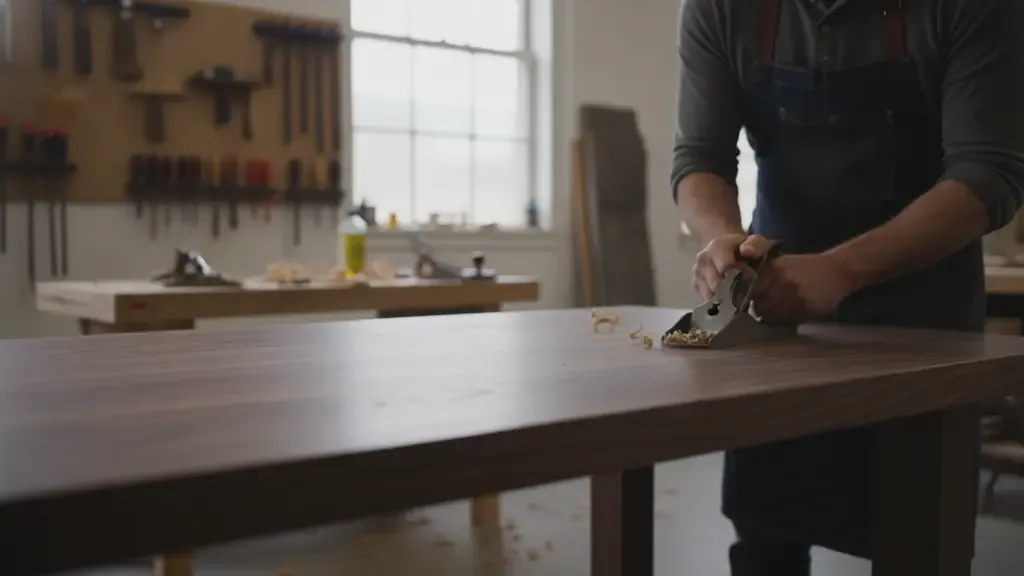
Craftsmanship is more than a handmade story or a polished showroom display. It is the consistency between the design promise and the physical piece. When comparing custom furniture made in USA programs, look for evidence that the maker can explain the work, not just describe it with broad adjectives.
| What to evaluate | Questions to ask | Why it matters |
|---|---|---|
| Construction | How are the frame, case, joints, drawers, or supports built? | Construction affects stability, serviceability, and the useful life of the piece. |
| Materials | Which wood, leather, textile, foam, finish, or hardware options are available? | Materials determine feel, appearance, maintenance, and how the furniture ages. |
| Customization | Can the dimensions, fill, fabric, finish, and configuration be changed? | The available options reveal whether the program truly fits the client's needs. |
| Origin | Where are design, fabrication, finishing, and assembly performed? | Origin is clearer when the production stages are described specifically. |
| Quality control | Who reviews the piece before it leaves production? | A defined review process reduces surprises at delivery. |
| Service | Who coordinates specifications, delivery, installation, and follow-up? | A strong service model protects the value of the design after the sale. |
Buyers should also distinguish between a brand's general manufacturing story and the origin of a particular item. A collection may include domestic production, imported components, or multiple manufacturing locations. For an important purchase, ask about the exact piece and record the confirmed specifications in the order documentation.
How does Nativa Interiors approach custom furniture?
Nativa Interiors approaches custom furniture as part of a broader design experience. The company was founded around client-focused furniture and design expertise and now combines retail, custom manufacturing, residential design, commercial design, staging, and showroom consultations. That breadth matters when a client is trying to make one custom piece work within a larger interior.
The Nativa Interiors collection includes furniture for living, dining, and bedroom spaces, including sofas, sectionals, sleeper sofas, accent chairs, leather seating, coffee tables, end tables, console tables, cabinets, beds, and dining pieces. The exact options depend on the collection, but the underlying process is consistent: clarify the room, choose the direction, refine the specifications, and coordinate the result with the rest of the project.
Nativa also represents selected premium brands, including American Leather, Gamma, Stressless, and Lee Industries. Those brands serve different furniture needs and are not interchangeable with Nativa's custom manufacturing program. A consultation can help a buyer decide whether an existing collection, a configurable piece, a custom Nativa option, or a combination of sources best fits the project.
The company's 200-plus North American artisan network is a central part of its manufacturing story. For buyers who search for custom furniture made in USA, that story is most useful when it leads to specific questions about the selected piece: who will make it, which materials are available, what can be adjusted, and how the finished furniture will be reviewed before delivery.
Clients can also use Nativa's residential interior design service when the furniture decision is part of a larger home project. The value is not simply access to a product. It is the ability to consider furniture, finishes, proportions, and room relationships together.
Which rooms benefit most from custom furniture?
Custom furniture can be useful anywhere the room has a specific architectural or functional demand. The best candidates are not always the most formal rooms. They are the rooms where a small mismatch would affect how the space looks or works every day.
Living rooms and great rooms
Living rooms often need to balance conversation, television viewing, reading, entertaining, and clear movement through the home. Custom sofas and sectionals can help address seat depth, arm height, configuration, and upholstery. A console, coffee table, or accent chair can then be selected to support the composition without making the room feel crowded.
Dining rooms
A dining table should fit the room, the chairs, the lighting, and the way the household gathers. Custom dimensions and finishes can make a difference in a room with an unusual footprint, a prominent view, or an open connection to the kitchen and living areas. Nativa's dining table collection can be a starting point for exploring shapes and materials.
Bedrooms and private retreats
A custom bed, headboard, nightstand, or cabinet can make an irregular bedroom feel resolved. The design should account for window placement, bedside reach, reading light, storage, mattress height, and the visual balance of the room. Upholstery and wood finishes can also create a quieter, more personal atmosphere than a generic bedroom set.
Commercial and hospitality spaces
Commercial projects bring additional requirements such as durability, repeatability, code considerations, delivery sequencing, and brand consistency. Nativa has experience with residential and commercial interiors, including hospitality, medical, retail, and corporate settings. For a commercial client, the right custom furniture conversation should include project schedules, quantities, maintenance expectations, and installation coordination from the beginning.
How should you compare custom furniture makers?
A comparison should begin with fit and transparency, not only with a photograph or a broad claim about craftsmanship. Use the following checklist when evaluating a maker, showroom, or design partner.
- Ask who owns the design conversation. You should know whether you are working with a designer, showroom specialist, manufacturer, or a combination of those roles.
- Clarify what custom means. Request a written list of available changes, including dimensions, fabrics, leathers, finishes, fills, hardware, and configurations.
- Confirm country of origin for the exact piece. Ask where design, fabrication, finishing, and assembly take place. Do not assume that a general American-made statement applies identically to every collection.
- Review material samples in the room. Natural and artificial light can change how a finish, leather, or textile reads next to flooring, paint, stone, and cabinetry.
- Discuss maintenance before selecting materials. The most beautiful material is not the best choice if it conflicts with the room's use or the client's care preferences.
- Measure the full path to the room. Include doors, elevators, stairs, tight turns, handrails, and any installation constraints.
- Understand the approval point. Confirm which details are final before fabrication and how changes are handled after approval.
- Ask how delivery and installation are coordinated. A premium result includes care for the home and a final review of the installed piece.
- Evaluate the broader design fit. A furniture maker or showroom should be able to explain how the piece can work with the rest of the interior.
This checklist helps separate meaningful customization from a short menu of cosmetic options. It also keeps the conversation focused on the buyer's actual risk: ending up with an expensive piece that does not fit the room, the routine, or the larger design.
Is custom furniture worth the investment?
Custom furniture can be worth the investment when the customization solves a real design or performance need. It may be the right choice when a standard piece cannot fit the room, when the client cares about a particular material or finish, when comfort needs to be individualized, or when the furniture must carry a project through several spaces.
It is less compelling when the buyer is choosing custom options only because the word sounds premium. A thoughtful evaluation compares the design benefit, construction, material quality, expected use, service, and long-term fit. The question is not whether every piece in a home should be custom. The question is which pieces deserve a more deliberate specification.
For many Nativa Interiors clients, the answer is a layered approach. A custom sofa or dining table may anchor the room. A curated piece from American Leather, Gamma, Stressless, or Lee Industries may provide a specific comfort or performance benefit. Interior design guidance can then connect those decisions with lighting, rugs, accessories, and architectural details.
What should you bring to a custom furniture consultation?
A consultation is more productive when the design team can see the room and understand how it is used. You do not need a finished plan. A few practical details can make the first conversation much more precise.
- Room dimensions, ceiling height, and a basic floor plan if available.
- Photos or video of the room from several angles.
- Measurements of doorways, stairways, elevators, and other delivery constraints.
- Images of furniture, finishes, art, or interiors that reflect the desired direction.
- A list of pieces that will remain, including their dimensions and finishes.
- Notes about how the room is used, including entertaining, children, pets, work, or accessibility needs.
- Preferred materials, colors, textures, and maintenance priorities.
- A realistic project sequence, especially if the furniture is part of a move, renovation, or commercial installation.
The goal of the first meeting is not to force a decision. It is to establish a shared understanding of what the room needs and which options deserve closer review. Nativa's showrooms in La Jolla, Solana Beach, and Newport Beach give San Diego and Orange County clients a place to experience furniture and materials in person.
Frequently asked questions about custom furniture made in USA
Is custom furniture made in USA always fully made in the United States?
No. The phrase can be used differently across the furniture industry. Ask where the exact piece is designed, fabricated, finished, and assembled, and whether any components are imported. A reputable design partner should help you confirm the origin and specifications of the collection you are considering.
What is the difference between custom and bespoke furniture?
Custom furniture often adapts an existing design through changes to size, material, finish, upholstery, or configuration. Bespoke furniture generally begins with a more original design brief and is made specifically around that client's vision. The terms overlap, so ask what changes are actually available and how the piece will be built.
What kinds of furniture can be customized?
Depending on the collection, customization may include sofas, sectionals, sleeper sofas, accent chairs, leather seating, dining tables, coffee tables, cabinets, beds, and other case goods. Options may include dimensions, fabrics, leathers, wood species, finishes, fills, hardware, and configurations.
How do I know whether custom furniture is right for my room?
Custom furniture is most useful when a standard piece cannot meet a specific need. Consider it when the room has unusual dimensions, the furniture must coordinate with existing architecture, comfort needs to be individualized, or the piece will anchor a larger design project.
Can a showroom help with custom furniture even if I am not furnishing an entire home?
Yes. A single sofa, dining table, bed, cabinet, or accent chair can benefit from professional guidance. A showroom consultation can help confirm proportions, materials, finish, delivery access, and how the new piece will relate to what you already own.
Make the custom furniture decision with confidence
Custom furniture made in USA is most valuable when the phrase leads to better questions and a better result. Look beyond the origin label to the design process, the materials, the construction, the people responsible for the work, and the service that carries the project through delivery. For Nativa Interiors, the advantage is the connection between custom furniture, North American artisan manufacturing, curated brands, showrooms, and client-focused design expertise. That integrated perspective helps turn a furniture purchase into a considered part of the home.
Whether you are furnishing one room, completing a new residence, or planning a commercial interior, begin with the space and the way it needs to work. Then choose the level of customization that solves the actual problem. The right piece should look distinctive, feel comfortable, fit the architecture, and continue to make sense long after the initial purchase.

