


Interior Design Services San Diego: A Local Guide

Choosing an interior design partner is about more than finding attractive furniture. The right team should understand how a space will be used. It should also understand how scale and natural light affect the experience. Each decision should connect from the first concept through installation. Nativa Interiors brings 25 years of client-focused furniture and design experience to that complete process.
Explore Nativa Interiors residential design services and request a showroom consultation.
This guide explains what interior design services San Diego clients may need. It covers how local conditions can influence a project and what full-service design includes. It also explains how to evaluate a design partner in San Diego and Orange County.
What Do Interior Design Services San Diego Clients Receive?
Interior design services are a professional process for planning, selecting, producing, and installing the elements that make a home or commercial space function beautifully. The scope can be focused on one room, expanded across a residence, or tailored to a hospitality, medical, retail, or corporate environment.
Depending on the project, the work may include space planning, furniture selection, custom furniture, material coordination, lighting direction, art and accessories, procurement, delivery, and installation. A full-service approach is valuable when there are several moving parts. Rather than treating a sofa, dining table, lighting plan, and room layout as unrelated purchases, the designer considers proportion, circulation, comfort, durability, and the way spaces connect.
- Space planning: Establishing practical layouts, sight lines, clearances, focal points, and pathways.
- Furniture selection: Choosing sofas, sectionals, sleeper sofas, accent chairs, tables, cabinets, beds, and dining pieces for the room and its use.
- Material coordination: Aligning upholstery, wood species, finishes, rugs, drapery, and other surfaces.
- Custom furniture: Developing pieces when a standard size, finish, or configuration cannot meet the project needs.
- Styling and finishing: Layering lighting, art, accessories, and details that give a space character.
- Delivery and installation: Coordinating final placement and presentation so the design is completed as a whole.
Defining the scope early helps the project stay focused. It also makes it easier to decide where professional coordination will add the most value. Whether that means solving an awkward layout, furnishing several rooms, or creating a consistent look across a property.
Why does local experience matter in San Diego and Orange County?
Local design experience matters because a space is shaped by more than its floor plan. San Diego and Orange County homes often call for a balance of indoor comfort and outdoor living. Abundant natural light, relaxed entertaining, and materials that feel elevated without becoming precious. A designer who understands the region can translate those conditions into a home that feels connected to its setting rather than decorated with a generic coastal look.
Local knowledge also helps with practical decisions. A designer can discuss how a room is used throughout the day. Whether upholstery needs to support frequent entertaining, and how furnishings should relate to views, windows, doors, and outdoor areas. In a coastal home, the goal is not to apply a theme. It is to create a durable and comfortable environment with thoughtful color, texture, proportion, and materials.
Designing for coastal light without creating a theme
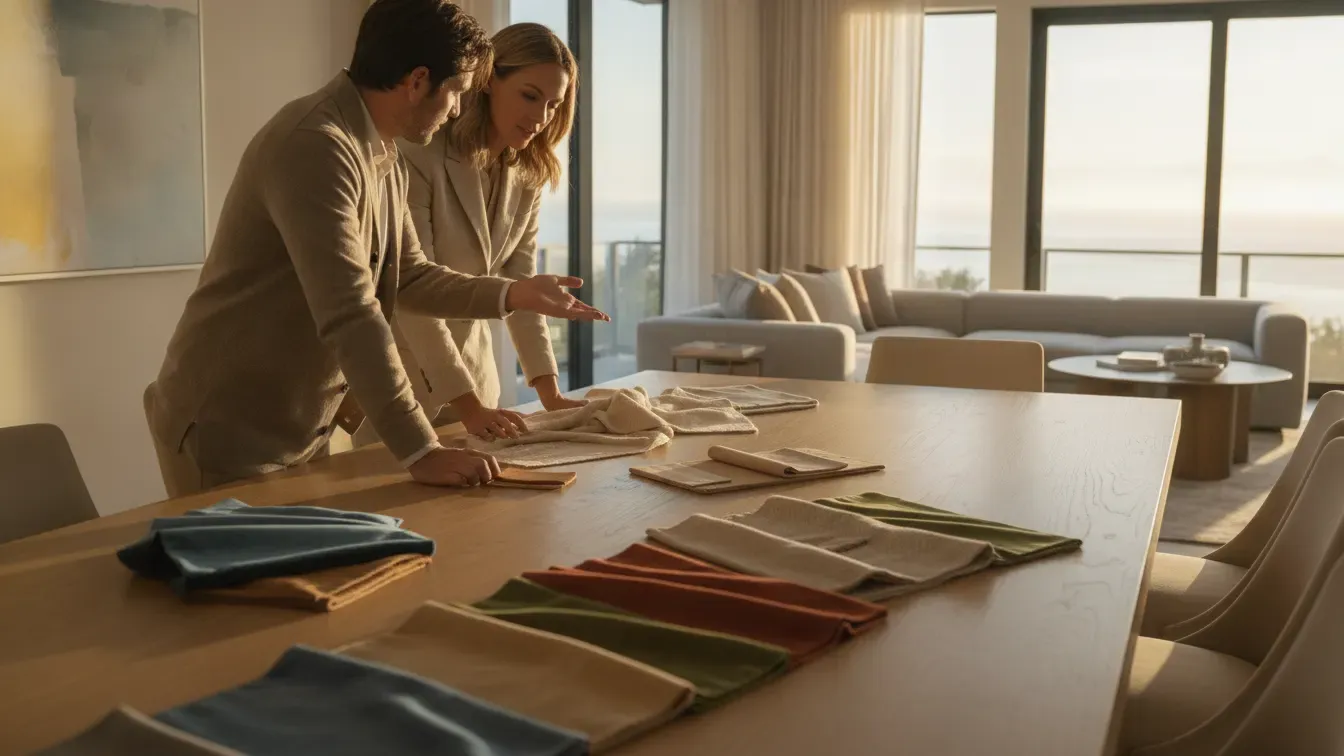
Natural light can change how upholstery, wood, paint, and metal finishes appear from morning through evening. Instead of choosing each item in isolation, a designer can review samples in relation to the architecture and the light the room receives. This approach helps the final palette feel layered and intentional.
The same principle applies in Orange County. A Newport Beach home, a La Jolla residence, and a property farther inland may share an appreciation for refined furnishings. But their layouts, views, entertaining habits, and architectural details will differ. The best design responds to the property and the client rather than forcing every project into the same visual formula.
How can luxury furniture support a complete interior design?
Luxury furniture supports a complete interior design when it combines lasting construction, considered proportion, comfort, and an appropriate level of customization. The most expensive-looking piece is not automatically the right choice. The right piece should solve a spatial or functional need while contributing to the room's visual language.
In a living room, that may mean selecting a sofa with the correct depth for conversation. Adding accent chairs that improve circulation, and using coffee and end tables to make the seating arrangement practical. In a dining room, the table must relate to the room's dimensions, the number of people who use it, and the dining chairs that surround it. In a bedroom, the bed, nightstands, lighting, and storage should work as a comfortable group.
Nativa Interiors offers living, dining, and bedroom furniture, including sofas, sectionals, sleeper sofas, accent chairs, leather seating, coffee tables, end tables, console tables, and cabinets. Relevant selections may include brands such as American Leather, Gamma, Stressless, and Lee Industries. The purpose of a curated selection is not to fill a room with labels. It is to give the client access to pieces that can support a coherent design direction.
When should a client consider custom furniture?
Custom furniture is useful when a standard piece cannot provide the desired dimensions, finish, upholstery, storage, or function. A custom sofa may need a particular depth. A dining table may need to fit a specific number of guests without overwhelming the room. A console may need to work around an architectural feature. In each case, customization should solve a defined problem or express a meaningful design priority.
Custom does not mean every item must be made from scratch. A strong design plan balances ready-to-order pieces, made-to-order selections, and custom elements. That balance can protect the overall composition while allowing the most important pieces to receive the attention they deserve. Learn more about Nativa Interiors custom furniture.
Related products


Its polished character complements sophisticated sofas, sectionals, and accent seating.
View productWhat is the difference between furniture shopping and full-service design?
Furniture shopping usually begins with an individual item. Full-service interior design begins with the space, the people using it, and the desired result. Shopping can be the right choice when a client already has a clear plan and needs one piece. Design services are more useful when the project involves multiple rooms, an unfamiliar scale, custom decisions, installation logistics, or a need to connect furniture with architecture.
| Approach | What it does |
|---|---|
| Furniture shopping | Starts with one piece, works best when the layout is already clear, and may cover selection and delivery. |
| Full-service design | Starts with the property, establishes layouts and priorities, and can connect selections, custom work, procurement, and installation. |
A full-service designer helps reduce disconnected decisions. The process can identify a room's priorities before selections are made, determine which pieces should be built around, and coordinate finishes so the result feels deliberate. It can also provide a second set of eyes when a client is deciding between comfort, visual impact, maintenance needs, and long-term use.
This distinction is particularly important for a new residence or a property being furnished after a renovation. Buying pieces one at a time can lead to mismatched scale, duplicated functions, or a room that looks finished but does not support the way the household lives. A design plan gives each selection a role.
For a smaller project, the same thinking can be applied at a reduced scope. One room still benefits from a layout, a material direction, a furniture plan, and a clear installation sequence. The right level of service is the level that matches the client's goals and the complexity of the space.
Which interior design services are available for homes?
Residential interior design can range from focused room planning to a full home or vacation property furnished and styled from concept through installation. The scope should reflect what the client wants to accomplish, how involved the designer will be, and which decisions need professional coordination.
Residential space planning and furnishings
Space planning establishes the foundation. It accounts for pathways, views, doors, windows, architectural features, conversation areas, work surfaces, storage, and the relationship between adjoining rooms. Once the layout is understood, furnishings can be selected for the correct scale and use.
This is where a designer's experience can prevent expensive missteps. A sectional that looks comfortable in a showroom may overpower a room. A beautiful dining table may not leave enough space for circulation. A pair of chairs may look balanced but block an important view. Planning before ordering makes these questions visible while there is still time to adjust.
Custom furniture and material direction
Residential projects also benefit from a clear material direction. Upholstery, wood, metal, stone, and decorative finishes should relate without becoming overly matched. The designer can help the client compare samples, consider maintenance, and determine where a statement material will have the greatest effect.
Personalization is important in luxury interiors. The goal is not to create a showroom replica. It is to create a home that reflects the people who live there. Whether their preference is coastal contemporary, transitional Californian, Mediterranean, modern mountain, or a combination developed around the property.
Installation and the final layer
Installation is part of the design, not an afterthought. The final stage involves delivery, placement, adjustment, and the visual relationships that become apparent when the furniture is in the room. A coordinated installation can make the difference between a group of attractive pieces and a finished interior that feels calm, comfortable, and complete.
Review Nativa Interiors residential interior design services to see how a project can move from initial direction to a more connected home.
How does the interior design process work?
A successful interior design process turns a broad vision into a sequence of clear decisions. The exact stages vary by project, but a full-service engagement commonly includes discovery, assessment, concept development, selection, production or procurement, and installation.
- Discovery: Discuss the property, goals, lifestyle, timeline, aesthetic direction, and spaces that matter most.
- Assessment: Review dimensions, architecture, existing pieces, circulation, lighting, storage, access, and technical considerations.
- Concept and planning: Establish design direction, room priorities, layouts, and the relationship between spaces.
- Selections: Compare furniture, fabrics, finishes, lighting, accessories, and custom options against the plan.
- Procurement and production: Coordinate orders, made-to-order production, custom work, and delivery timing.
- Installation: Place the furnishings, complete the final layer, and review the finished environment.
Clients can make the process more productive by collecting inspiration images, approximate dimensions, photographs of the existing space, and a list of practical priorities. It is also helpful to identify what must stay, what can change, and how the room needs to function on an ordinary day.
Good communication is central to every stage. A design team should be able to explain why a selection supports the plan, identify decisions that affect the timeline, and make room for the client's response. The process should feel collaborative, even when the designer is managing complex details behind the scenes.
Can Nativa Interiors help with commercial interior design?
Yes. Nativa Interiors provides commercial interior design and high-end furnishings for property owners and professionals working across hospitality, medical, retail, and corporate environments. Commercial design requires a different set of questions from residential work, including circulation. Guest experience, durability, maintenance, operational needs, and the way a brand is expressed through the space.
A commercial interior should be attractive, but it also needs to work. A hotel lobby must welcome guests and support movement. A restaurant needs to balance atmosphere, seating, staff circulation, and maintenance. A medical environment must feel considered while supporting comfort and clear wayfinding. A corporate setting should reflect the organization while giving people a practical place to work and meet.
Furniture selection is part of that operational conversation. Materials, proportions, traffic patterns, and maintenance expectations should be considered together. A design partner who can coordinate furnishings and custom pieces can help the property owner avoid a collection of disconnected purchases.
Commercial projects may also involve multiple stakeholders. Owners, operators, architects, contractors, and brand teams can each bring different priorities. A clear design brief helps align those priorities before selections are finalized. Read more about luxury commercial interior design when evaluating the needs of a business or property.
How should you compare interior designers in San Diego?
The best interior designer for a project is not necessarily the firm with the most recognizable style. A strong match depends on communication, relevant experience, process, service scope, and the ability to deliver the level of coordination the project requires.
- Review relevant work: Look for projects with a similar scale, property type, level of finish, or functional challenge.
- Ask about the process: Learn how the firm moves from discovery to selections, procurement, and installation.
- Discuss communication: Confirm who will be involved, how decisions are presented, and how changes are handled.
- Clarify the scope: Determine whether the engagement covers planning, furnishings, custom work, delivery, installation, or only selected parts of the project.
- Consider the furniture relationship: Ask whether the firm can help source, customize, and coordinate the major pieces the space requires.
- Look for local access: A showroom can make it easier to review materials, compare furniture in person, and continue the conversation away from a screen.
The first conversation should make the client feel heard. A designer may have a point of view, but the work still needs to reflect the client's property, habits, priorities, and sense of home. A strong fit is usually apparent in the quality of the questions as much as in the images presented.
What makes Nativa Interiors different?
Nativa Interiors brings furniture retail, custom manufacturing, residential and commercial design, showrooms, and installation together under one integrated experience. That combination gives clients a connected path from design direction to the pieces that bring the plan to life.
The company serves San Diego and Orange County through showrooms in La Jolla, Solana Beach, and Newport Beach. Clients can review furniture and materials in person, discuss a project with a design team, and use the showroom experience as a starting point for a broader plan. Explore the Nativa Interiors showrooms before planning a visit.
Nativa also works with established furniture brands and offers custom options for clients who need a particular size, finish, upholstery, or configuration. The benefit is not simply having more products to choose from. It is having a design conversation that can connect the room's purpose, the furniture's performance, the desired aesthetic, and the final installation.
For affluent homeowners and property owners, this integrated model can simplify a project without making it feel standardized. For commercial clients, it provides a way to discuss design, furnishings, and operational needs as related decisions. In both cases, the central question remains the same: how should the finished space feel, function, and support the people who use it?
What should you bring to a showroom consultation?
A first consultation does not require a finished design plan. It is more useful to bring enough information for the designer to understand the project and ask better questions. Consider bringing:
- Photographs or video of the rooms, including views, doorways, windows, and existing furnishings.
- Approximate dimensions or floor plans, if they are available.
- Inspiration images that show colors, materials, furniture shapes, or atmospheres you prefer.
- A list of pieces that must remain, pieces that can be replaced, and functions the room needs to support.
- Information about household members, guests, pets, entertaining, work, or other daily uses that affect the design.
- Questions about custom furniture, lead times, delivery, installation, and the level of service you need.
It is also helpful to describe what you do not like. A clear dislike can be as useful as a favorite image because it helps the designer narrow the direction. The consultation should create a shared understanding of the property, not pressure the client to make every decision immediately.
When you are ready, connect with Nativa Interiors about residential design or visit a showroom to begin a more focused conversation.
Frequently Asked Questions
What do interior design services in San Diego usually include?
They may include discovery, space planning, furniture selection, custom furniture, material coordination, styling, procurement, delivery, and installation. The exact scope depends on the property, the number of rooms, and the client's goals.
Does Nativa Interiors serve Orange County?
Yes. Nativa Interiors serves Orange County through its Newport Beach showroom and works with clients seeking luxury furniture, custom pieces, and residential or commercial design support.
Can an interior designer help select furniture?
Yes. Furniture selection is often central to the design process. A designer can evaluate scale, proportion, comfort, circulation, upholstery, finishes, and the relationship between pieces before orders are placed.
What is the benefit of custom furniture?
Custom furniture can solve a specific dimensional, functional, material, or aesthetic requirement. It is especially useful when a standard piece cannot fit the room or express the design direction.
Does Nativa Interiors work on commercial projects?
Yes. Nativa Interiors provides commercial interior design and furnishings for hospitality, medical, retail, and corporate environments. Commercial planning should address traffic, guest or customer experience, durability, maintenance, and operations.
How do I begin an interior design project with Nativa Interiors?
Start by reviewing the residential design, custom furniture, and showroom information, then request a conversation about your property and goals. Room photographs, approximate dimensions, inspiration, and a list of priorities can make the first consultation more productive.
Plan a more connected interior
The strongest interior design projects begin with a clear understanding of how a property should feel and function. In San Diego and Orange County, that may mean creating a relaxed coastal home. A refined entertaining space, a personalized vacation property, or a commercial environment that supports a distinct guest experience.
The furniture matters, but so do the decisions that connect the furniture to the room. Nativa Interiors brings furniture retail, custom manufacturing, residential and commercial design, showrooms, and installation together for clients who want a more coordinated path from idea to finished space.
Visit a Nativa Interiors showroom or begin your design conversation.

