


Transitional Interior Design: Classic and Contemporary

Transitional interior design is for homeowners who want a home to feel polished but never precious, current but not dictated by a trend. It brings the comfort and familiar character of classic interiors together with the clean lines and practical ease of contemporary design. The result is a layered, livable look that can suit a La Jolla retreat, a Solana Beach home, or a Newport Beach residence. If you are drawn to both traditional details and modern furniture, transitional style offers a thoughtful way to let them share the same room. For a broader introduction to design styles, explore Nativa Interiors' interior design style guide.
Schedule a showroom consultation to talk through the right balance of classic and contemporary pieces for your home.
What Is Transitional Interior Design?
Transitional interior design blends traditional and contemporary elements into one cohesive space. It is not a 50-50 formula, and it does not require a room to look half traditional and half modern. Instead, the style depends on relationships: a curved sofa can soften a linear coffee table, a tailored fabric can balance a carved wood accent, and a quiet neutral palette can give both pieces room to belong.
The best transitional rooms feel calm at first glance, then reveal their detail over time. They are edited rather than empty, comfortable rather than casual, and refined without relying on excessive ornament. The style also leaves room for a home to evolve. A treasured piece, inherited artwork, or newly commissioned table can join the room when it connects through scale, color, material, or shape.
- Balanced silhouettes: Pair straight, tailored forms with selected curves or softer profiles.
- Layered neutrals: Use a quiet base of cream, taupe, gray, tan, or warm white, then build depth with texture.
- Restrained detail: Choose a few memorable architectural, lighting, or decorative moments instead of filling every surface.
- Comfort with intention: Select furniture that supports everyday living while maintaining an elevated sense of proportion.
- Material continuity: Repeat a wood tone, metal finish, or textile quality so different eras feel connected.
How Transitional Design Blends Classic and Contemporary Elements
Think of transitional design as a conversation between two points of view. Classic elements contribute warmth, history, and visual softness. Contemporary elements contribute clarity, function, and restraint. The room becomes successful when neither voice overwhelms the other.
| Classic influence | Contemporary influence | Transitional connection |
|---|---|---|
| Traditional wood detailing | Clean-lined casework | Repeat a warm wood tone while simplifying the surrounding shapes |
| Soft, rounded upholstery | Streamlined proportions | Choose comfortable seating with a tailored profile and controlled scale |
| Pattern, trim, or collected artwork | Solid, tonal textiles | Use one expressive layer against a quieter foundation |
| Antique-inspired or decorative lighting | Simple architectural lines | Let one fixture provide character without competing with the room |
A useful starting point is to identify three pieces you already love. Look for a shared quality, such as a warm finish, a muted color, a rounded edge, or a specific scale. Use that quality as a bridge as you add new furniture. This prevents the room from becoming a collection of unrelated styles and gives you a practical way to make confident decisions.
Proportion matters as much as style. A petite traditional side chair may disappear beside an oversized sectional, while an imposing contemporary table can make a smaller sitting room feel crowded. Measure the room, note the circulation paths, and allow each significant piece enough visual space to be appreciated. Transitional design feels effortless because the composition has been carefully considered.
Color Palettes and Fabrics in Transitional Interiors
Color in a transitional interior usually creates a sense of continuity rather than contrast. Begin with a foundational neutral, then layer nearby tones instead of treating every surface as a separate color decision. Warm white walls, oatmeal upholstery, taupe rugs, and natural wood can create a generous backdrop. Charcoal, deep brown, muted blue, or olive can add definition when used selectively.
Texture keeps a restrained palette from feeling flat. Combine linen, wool, cotton, leather, wood, stone, and metal in a controlled mix. For example, a tailored sofa can sit above a textured rug, beside a wood table, with a brushed metal lamp adding a small shift in sheen. The materials do not need to match exactly. They need to relate in weight, warmth, and finish.
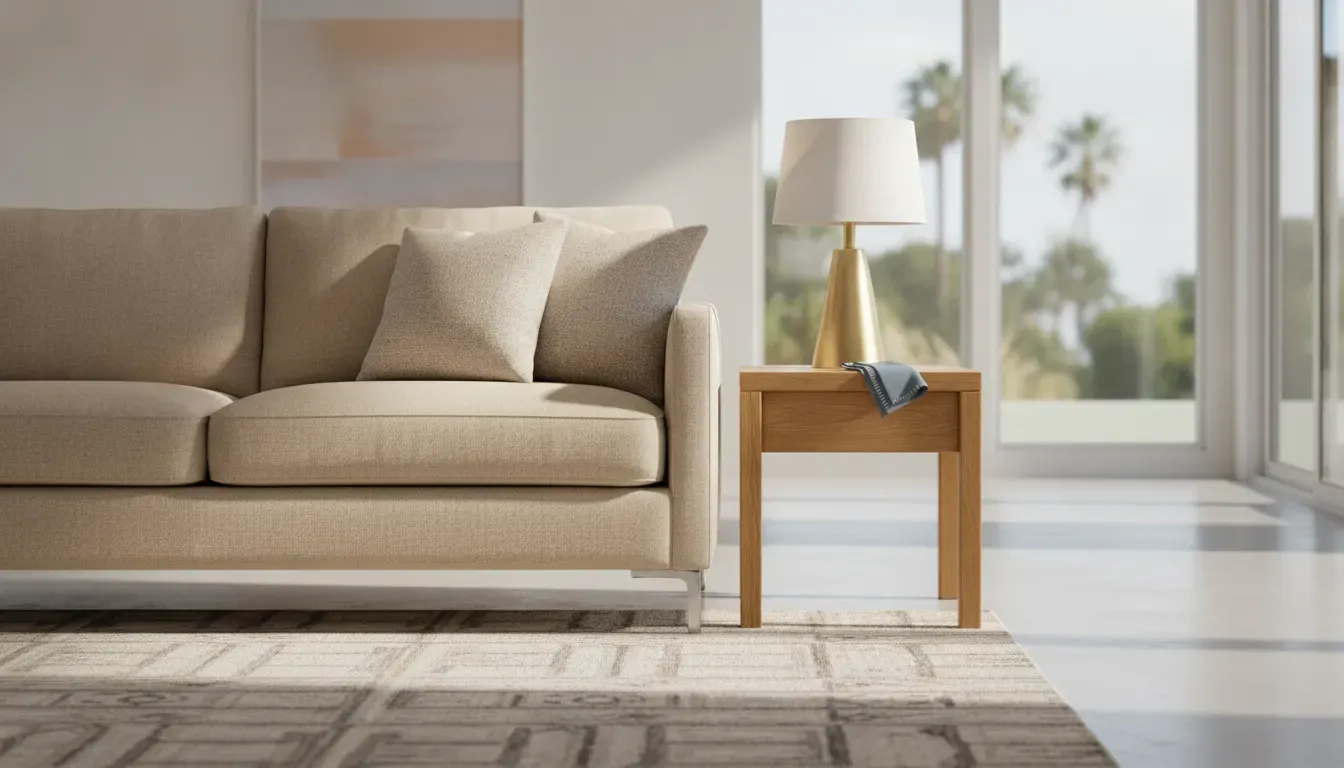
Patterns work best when they support the room's rhythm. A subtle geometric rug, a small-scale check, or a restrained botanical can add personality without turning the space into a theme. If you want a stronger pattern, repeat one of its colors in a quieter textile or accessory. This makes the statement feel intentional rather than isolated.
In a Southern California home, natural light can change how every neutral reads throughout the day. Test fabric and paint samples in morning and afternoon light, and consider the view outside the windows. A transitional palette should feel comfortable in the room's real conditions, not only in a showroom photograph.
Need help narrowing your palette and materials? Explore Nativa Interiors' residential interior design services for a more personalized path from concept to installation.
Related products


Furniture Selection for a Transitional Living Room
The living room is a natural place to apply transitional design because it needs to feel welcoming while carrying much of the home's visual identity. Start with the largest piece, usually the sofa or sectional, and choose a silhouette that is comfortable without looking overstuffed or overly severe. A tailored arm, gentle curve, or clean base can provide the bridge between classic ease and contemporary clarity.
Build the seating arrangement around conversation and movement, not simply around the television. Add an accent chair with a different but compatible profile, then connect it to the sofa through fabric, color, or leg finish. A leather chair can bring depth to a neutral fabric sofa. Two chairs with a more traditional outline can soften a streamlined sectional when their scale remains proportional.
For the center of the room, select a coffee table that gives the seating enough breathing room. Wood brings warmth and history. Stone or glass can add a lighter contemporary note. A rectangular table can echo a linear floor plan, while a round or oval table can soften a room with many right angles. The best choice is the one that supports circulation and repeats a material already present.
Side tables, consoles, cabinets, and lighting should complete the composition without competing for attention. Use a cabinet or console to provide useful storage and a grounded focal point. Let one lamp, mirror, or artwork introduce a more decorative note, then keep surrounding accessories edited. For furniture that needs specific dimensions, finishes, or upholstery, custom furniture design can make the transitional approach feel considered rather than compromised.
When shopping, assess more than the look of a piece. Ask how it will be used, how the upholstery will perform, whether the scale suits the architecture, and how the finish will work with existing materials. Nativa's living room furniture collection can be a starting point for comparing sofas, sectionals, accent chairs, tables, and cabinets within a broader design plan. If you are still comparing aesthetics, return to the broader interior design style guide before narrowing your furniture choices.
Common Mistakes in Transitional Design and How to Avoid Them
Making every piece a compromise
Transitional does not mean every piece must look generically in between. A room becomes forgettable when classic and contemporary choices are softened until neither has a clear point of view. Instead, allow selected pieces to be distinctly classic or distinctly contemporary, then connect them through scale, color, material, or placement.
Using too many unrelated finishes
Mixing materials adds sophistication, but too many wood tones, metals, and upholstery colors can make the room feel fragmented. Choose a primary wood family, one or two metal finishes, and a limited textile palette. Variation is welcome when the room has a clear visual anchor.
Confusing neutral with unfinished
Neutral rooms still need contrast, shape, and tactile interest. If the space feels bland, do not immediately add more decoration. Try a deeper accent tone, a more dimensional rug, a sculptural light, or a piece with a stronger silhouette. Thoughtful editing usually creates more impact than additional objects.
Ignoring scale and architecture
Even beautiful furniture can feel wrong when it is too small, too large, or placed without regard for the room's structure. Account for ceiling height, window placement, door swings, walkways, and the visual weight of built-ins. Transitional design relies on balance, so a simple floor plan and measured furniture layout are valuable before purchasing.
Styling the room all at once
A transitional home should feel collected, not staged in a single afternoon. Leave space for art, books, travel finds, and objects with personal meaning. The room can begin with a strong foundation and develop as you live in it. That sense of progression is part of what keeps the style timeless.
Ready to create a home that feels classic, current, and personal? Book a consultation with Nativa Interiors to discuss furniture, materials, and a design direction that fits your space.
Is Transitional Style Right for Your Home?
Transitional style may be a strong fit if you want your home to feel sophisticated without feeling formal, comfortable without feeling casual, and updated without chasing every new trend. It works especially well for homeowners who are combining existing pieces with new furniture, furnishing a home over time, or looking for a design language that can adapt as their needs change.
It can also support different types of architecture. In a home with traditional details, contemporary furniture and edited lighting can keep the room from feeling dated. In a newer home, warmer wood, tailored upholstery, layered textiles, and carefully chosen decorative pieces can add character without forcing historic details that do not belong.
Nativa Interiors approaches transitional Californian design as part of a broader residential design offering. With showroom, furniture, custom manufacturing, and design expertise connected in one experience, the team can help you move from a general preference to a cohesive plan for living, dining, and bedroom spaces. Visit the Nativa Interiors showrooms or begin with a consultation to see how classic and contemporary elements can work together in your home.

