


Modern Mountain Interior Design: How to Bring the Outdoors In

Modern mountain interior design brings the textures and sheltering feeling of a mountain retreat into a cleaner, more tailored home. Stone, wood, leather, natural textiles, and generous views create the connection to nature, while restrained silhouettes and thoughtful scale keep the room polished rather than rustic.
Ready to bring this look home? Talk with Nativa Interiors about residential interior design for a plan shaped around your home and lifestyle.
Modern mountain interior design is a warm, contemporary style that pairs natural materials such as stone and wood with clean-lined furniture, tactile textiles, and a palette drawn from the landscape. It feels grounded and inviting without relying on cabin cliches, heavy ornament, or a strictly rustic look.
If you are exploring several directions for a home in San Diego or Orange County, begin with Nativa Interiors' interior design style education guide. The broad glossary can help you compare styles, while this guide focuses on the particular balance of natural character and modern restraint that defines modern mountain interiors.
What Is Modern Mountain Interior Design?
Modern mountain interior design interprets the landscape through material, light, texture, and proportion. It takes the grounded qualities people associate with a mountain home, including stone, timber, leather, wool, and broad views, then edits them through contemporary architecture and furniture. The goal is not to recreate a lodge. It is to create a home that feels calm, connected to nature, and comfortable for everyday life.
The style often begins with the architecture. A view, a stone wall, a wood ceiling, or a strong window line can become part of the composition. Furnishings then support those features rather than compete with them. Clean-lined sofas, sculptural tables, tailored accent chairs, and carefully chosen art allow the material story to remain visible.
Modern mountain also leaves room for regional interpretation. In a mountain community, the palette may respond to snow, dark timber, and dramatic rock. In Southern California, the same principles can feel lighter and more open, with sun-washed neutrals, warm woods, indoor-outdoor connections, and materials selected for the way a home is actually used.
Key Elements: Stone, Wood, Steel, and Natural Textiles
A modern mountain room feels convincing when a few substantial materials do most of the visual work. Rather than layering many decorative motifs, use a focused combination of hard, soft, warm, and dark elements. Each material should add either contrast or continuity to the room.
- Stone: Use a fireplace surround, hearth, side table, or architectural wall to add weight and a sense of permanence. Honed or softly textured finishes usually feel more contemporary than highly polished surfaces.
- Wood: White oak, walnut, and other expressive woods bring warmth through flooring, ceilings, cabinetry, dining tables, and occasional furniture. Let the grain show, but balance it with quieter finishes nearby.
- Steel and dark metal: Blackened steel, matte iron, and dark bronze provide definition around windows, lighting, tables, or fireplace details. A small amount can sharpen an otherwise soft palette.
- Natural textiles: Wool, linen, cotton, leather, and woven fibers add touchable comfort. Use them on upholstery, rugs, window treatments, pillows, and throws so the room feels layered without becoming busy.
The most successful combinations vary texture more than color. A smooth plaster wall can sit beside rough stone, a nubby wool rug, and softly grained wood. The contrast creates depth while the restrained palette keeps the room visually quiet.
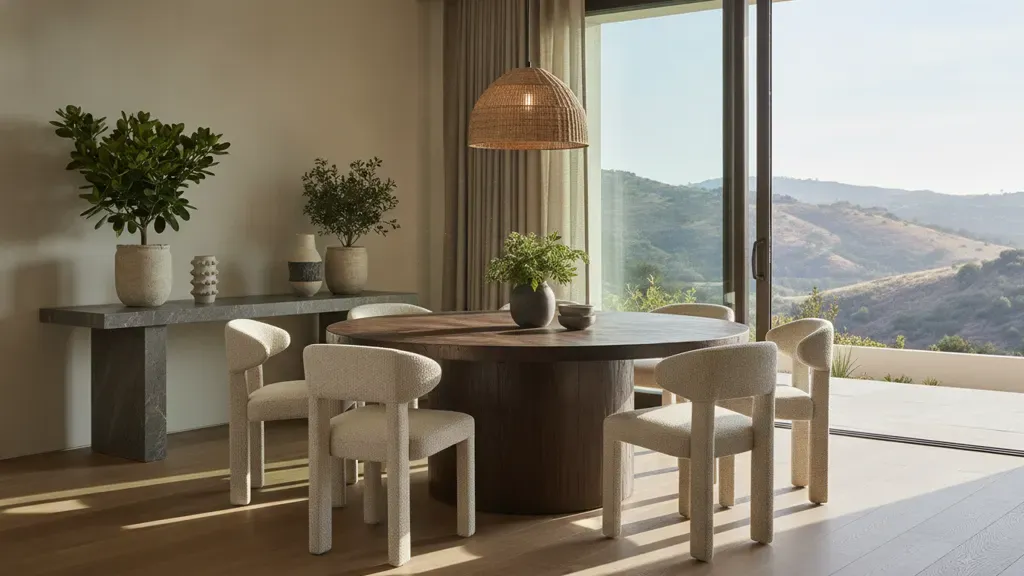
How Do You Choose a Color Palette for Modern Mountain Interiors?
Start with colors that already appear in the setting, then adjust their intensity for the atmosphere you want. A modern mountain palette usually feels layered and tonal rather than starkly monochromatic. Warm neutrals create the foundation, while charcoal, olive, clay, or muted blue can add depth in controlled amounts.
| Palette layer. | Useful choices. | Where to use it. |
|---|---|---|
| Foundation. | Warm white, sand, mushroom, taupe. | Walls, large upholstery, rugs, and curtains. |
| Natural anchor. | Oak, walnut, stone, warm gray. | Floors, tables, cabinetry, fireplaces, and consoles. |
| Contrast. | Charcoal, blackened metal, deep brown. | Lighting, window frames, case goods, and small accents. |
| Landscape accent. | Olive, moss, clay, rust, muted blue. | Art, pillows, occasional chairs, and collected objects. |
For a bright Southern California home, keep the foundation lighter and allow the landscape to provide visual depth through the windows. In a room with less natural light, warmer taupes, walnut, and layered lighting can prevent the palette from feeling flat. The right answer depends on the architecture, existing finishes, and how the room transitions to adjacent spaces. Sample colors in morning and evening light before committing, since the same neutral can feel cooler or warmer as the day changes. This small step helps the final palette feel intentional.
Related products


Signature taupe leather-wrapped armrests introduce tactile contrast and understated character.
View product →How Do You Layer Warmth Without Losing the Modern Edge?
Warmth comes from proportion and touch, not from adding every rustic reference at once. Pair one or two substantial natural materials with furniture that has a clear silhouette. Then use textiles, lighting, and art to make the room feel welcoming. This keeps the composition contemporary while giving it the sensory richness associated with a mountain retreat.
- Begin with one anchor: Choose the fireplace, a stone surface, a wood ceiling, or a view as the room's primary feature.
- Balance weight: If the stone or wood is visually strong, use upholstery and walls in calmer tones. If the architecture is minimal, introduce more texture through rugs and seating.
- Mix tailored and relaxed pieces: A clean-lined sofa can sit comfortably beside a supple leather chair, a woven rug, or a hand-finished table.
- Use lighting as a material: Layer ambient, task, and accent lighting so the room has depth after daylight fades. A dark metal fixture can echo window frames without dominating the space.
- Edit the accessories: Choose a small group of objects with material or personal meaning. Negative space helps the natural materials read as intentional.
Comfort should remain measurable in the room's use. Can people move easily around the coffee table? Does the seating support conversation? Are the textiles practical for the household? A modern mountain interior is not a showroom vignette. It should be a composed setting for real routines, meals, guests, and quiet time.
Want help balancing materials, scale, and comfort? Explore Nativa Interiors' custom furniture service for pieces designed around the room rather than selected as afterthoughts.
What Does Modern Mountain Design Look Like in a Southern California Home?
In Southern California, modern mountain design works best as a translation rather than a literal import. Preserve the style's grounding qualities, but let the local light, landscape, and indoor-outdoor lifestyle shape the result. The room may be open to a hillside, courtyard, or garden instead of a snowy view. The palette can be lighter while still feeling substantial.
- Use warm oak, walnut, or natural stone to give bright rooms visual grounding.
- Choose performance-minded upholstery and durable finishes for spaces that open to outdoor living.
- Keep window treatments and furniture placement oriented toward light and views.
- Introduce blackened metal or charcoal in measured accents rather than making the entire room dark.
- Use woven, linen, and wool textures to soften clean architecture without adding visual clutter.
- Let art and collected objects reflect the homeowners' story instead of relying on generic mountain imagery.
This approach can suit a La Jolla, Solana Beach, or Newport Beach home when the design responds to the property's architecture and the client's daily life. Nativa Interiors lists Modern Mountain among its signature residential aesthetics and combines design planning, furniture customization, delivery, and installation through an integrated experience.
In practice, that may mean choosing a pale oak floor instead of a dark stain, then adding depth through a leather chair or charcoal light fixture. It may mean framing a garden view with a low sectional or using a stone console in an entry where the material can make an impression without taking over. The style remains recognizable because the choices share a natural, tactile language, not because every room copies a lodge.
Furniture Choices That Anchor a Modern Mountain Room
Furniture gives the style its modern point of view. Look for pieces with confident scale, clear profiles, and materials that become more interesting with use. A sofa or sectional should establish the room's proportion, while accent chairs and tables bring contrast without making the arrangement feel fragmented.
| Furniture piece. | What to look for. | Design role. |
|---|---|---|
| Sofa or sectional. | Deep comfort, tailored lines, durable upholstery. | Creates the main gathering zone. |
| Leather seating. | Natural variation, supportive scale, restrained detail. | Adds contrast and material depth. |
| Coffee table. | Solid wood, stone, or a mixed-material base. | Connects seating and reinforces the anchor material. |
| Accent chairs. | A distinct silhouette with tactile fabric or leather. | Adds flexibility and a conversational counterpoint. |
| Cabinet or console. | Quiet storage with a beautiful finish. | Controls clutter while extending the material palette. |
Do not choose every piece from the same collection. A room feels more considered when the forms relate but do not match exactly. Nativa Interiors' showroom selection includes sofas, sectionals, sleeper sofas, accent chairs, leather seating, coffee tables, end tables, console tables, and cabinets, giving homeowners room to build a cohesive arrangement with variation.
For a connected plan, bring measurements, photos, and a sense of how the room needs to work to a showroom consultation. The right designer can help resolve scale, material transitions, upholstery needs, and the relationship between custom and ready-to-place furniture.
That planning matters because furniture is the part of the design you live with most closely. A handsome material story will not feel successful if the sofa crowds the walkway or the coffee table sits too far from the seating. Measure first, then consider how many people gather in the room, where light falls, and which pieces need to work harder for everyday life.
It is also useful to decide where you want visual quiet. If the architecture already provides stone, beams, or a strong view, keep the furniture profiles simple. If the room is a blank canvas, a substantial table, textured rug, or sculptural chair can establish the character without adding visual clutter. This balance is what keeps modern mountain interiors welcoming instead of themed.
See the possibilities in person by visiting a Nativa Interiors showroom and discussing your modern mountain vision with the design team.
Frequently Asked Questions About Modern Mountain Interior Design
What is the difference between modern mountain and rustic interior design?
Modern mountain design uses natural materials and a landscape-inspired palette, but it combines them with contemporary proportions, cleaner silhouettes, and more edited decoration. Rustic design may lean more heavily on distressed finishes, traditional forms, or visible lodge references.
Can modern mountain interior design work without a mountain view?
Yes. The style is defined by its material and sensory language, not by a required location. Stone, wood, natural textiles, comfortable furniture, and a calm palette can create the feeling in a city or coastal home. The design should respond to the home's own architecture and landscape.
Which materials work best in a modern mountain room?
Stone, expressive wood, leather, wool, linen, woven fibers, and dark metal are useful starting points. Combine rough and smooth surfaces, then keep the color palette focused so the materials provide the visual interest.
How can I make modern mountain design feel lighter for Southern California?
Use a lighter foundation of warm white, sand, or taupe, orient furniture toward daylight and views, and use dark metal and deeper wood as accents. Indoor-outdoor connections, breathable textiles, and uncluttered arrangements help the style feel regional rather than copied from a colder climate.
How does Nativa Interiors help with modern mountain interior design?
Nativa Interiors provides residential interior design, furniture selection, custom furniture, delivery, and installation. Its designers can help shape a modern mountain direction around the home's architecture, the client's routines, and the desired balance of comfort and refinement.
A guided process can be especially helpful when several finishes need to work together. The design team can compare upholstery, wood tones, stone character, and furniture scale in relation to the home rather than treating each purchase as an isolated decision. That keeps the finished rooms connected while leaving space for the homeowners' personality and routines.

