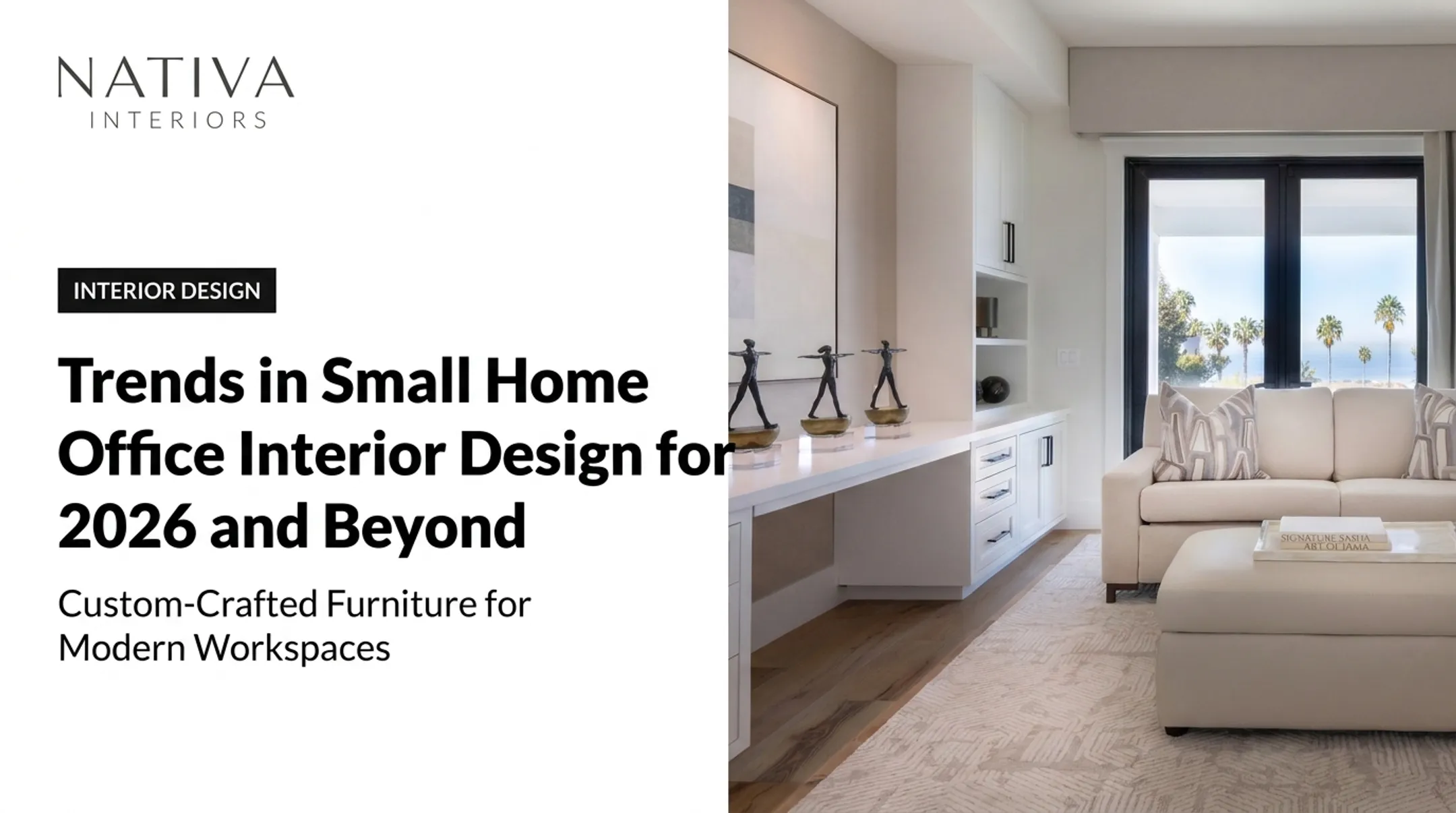

Too many home offices suffer from the same problems: a folding table pressed into service as a desk, cables snaking across the floor, harsh overhead light, and a chair that looks better than it feels after hour three of a Zoom call. None of that says "luxury." It says "afterthought."
This guide breaks down what actually separates a beautifully designed home office from a room with a desk in it. We'll cover purposeful planning, custom furniture and materials, layered lighting and decor, and the comfort, technology, and privacy details that keep the space functional long after the design photos are taken.
Key Takeaways
- Luxury comes from balancing beauty, performance, comfort, and personalization—not price alone.
- Start with how you'll use the room, then build desk placement, storage, and lighting around those habits.
- Custom furniture solves fit and storage problems off-the-shelf pieces can't, especially in odd-shaped rooms.
- Layered lighting and curated decor create polish without formality or clutter.
- Concealed cables, ergonomic seating, and acoustic control keep the room comfortable all day—not just camera-ready.
Plan the Space Around How You Work
Before you shop for a single piece of furniture, define what actually happens in this room.
Define Primary Functions First
A home office used mainly for focused, heads-down work needs a different setup than one built for back-to-back video meetings, client visits, or creative work. Ask yourself:
- Do you take video calls that require a polished, camera-ready background?
- Will you need seating for a second person, or occasional guests?
- Is this room doing double duty as a guest bedroom, library, or reading nook?
Answer those questions first. Everything else follows from them: desk size, storage, and seating.
Position the Desk for Light and Video Calls
Desk placement is where most home offices go wrong. According to OSHA's guidance on computer workstation monitors, keep the screen at least 20 inches from your eyes, with the top at or below eye level.
Place the monitor perpendicular to windows rather than facing them head-on. That last point matters more than people think.
Facing a window head-on creates glare on your screen and backlights you into a silhouette on video calls. Angle the desk so the window falls to your side: you get natural light on your face without glare fighting the monitor.

If you're on camera often, put a wall or a considered vignette behind you—art, a bookshelf, or a plant—rather than a blank stretch of drywall.
Map Circulation Before You Order Anything
Before furniture arrives, walk the room and account for:
- Door swings and how they interact with your desk or storage
- Clearance for your chair to roll back fully
- Space for a second chair if clients or family use the room
- A clear path between your desk and any lounge or reading zone
Choose One Design Language
Pick one dominant direction—contemporary, traditional, transitional, or a collected mix—and let two or three accents support it. A room that borrows equally from five styles reads as indecisive, not curated.
This is often where a professional designer earns their fee: translating your existing furnishings and architecture into a plan that feels intentional rather than generic. Nativa Interiors' design team works this way, starting with how a client actually lives before a single sketch is drawn.
Invest in Custom Furniture and Premium Materials
Once you know how the room will function, the furniture decisions get much easier.
The Core Pieces You Actually Need
A well-planned luxury home office typically includes:
- A desk sized correctly for the room, not just for the equipment on it
- An ergonomic task chair built for daily use
- Occasional or guest seating
- Storage for files, supplies, and equipment you don't want visible
- A secondary surface for spreading out documents or meeting with someone
Choosing a Desk That Matches Your Work
Match the desk form to how you actually work:
- Executive desks for rooms built around presence and formality
- Writing desks for smaller rooms or multipurpose spaces
- Built-ins when dimensions are awkward and need a permanent solution
- Table-style surfaces when you spread out drafting, boards, or paperwork
Nativa Interiors' Avalon Desk illustrates the trade-offs well. It has a broad rectangular top, a central knee space, and drawer-and-cabinet storage on both sides. Made to order in North Pacific Alder, American White Oak (+$879.20), or Black American Walnut (+$1,758.40), it starts around $4,396.

That material range lets the desk align with existing millwork or flooring instead of reading as a separate object in the room.
Why Custom Furniture Solves What Off-the-Shelf Can't
Standard furniture assumes a standard room. Custom furniture doesn't.
- Fits unusual dimensions, alcoves, angled walls, low ceilings
- Routes cables invisibly through the piece itself
- Matches finishes across desk, shelving, and built-ins
- Adjusts depth, fabric, and hardware to your actual habits, not a showroom mock-up
Nativa's custom pieces are handcrafted in North America with a typical production lead time of six to eight weeks plus shipping, using sustainable materials and low-VOC, water-based finishes.
Selecting Materials That Last
Before committing to a finish, check:
- Wood grain consistency and how the species ages with sunlight
- Stone durability (some natural stones etch with acidic spills)
- Upholstery performance under daily use
- Hardware and joinery quality, not just the visible finish
Anchor the room with one dominant material—a walnut desk, for example—then add two or three complementary textures such as leather seating, a woven rug, and brushed metal hardware. Layered restraint reads as luxury; matching everything reads as a showroom.
Layer Lighting, Color, and Finishing Details
Lighting and color do more work in a home office than most people budget for.
Build a Three-Layer Lighting Plan
A well-lit office combines:
- Natural light — positioned to avoid glare, as covered above
- Ambient light — general illumination that keeps the room usable after dark
- Task and accent light — focused light for reading, plus lighting that highlights artwork or shelving

Nativa's showroom vignettes often pair layered table lamps with abstract wall art to show how this works in practice: one fixture for function, another for mood.
Treat Windows as Part of the Design
Window treatments handle glare, privacy, and heat, but they shouldn't fight the room's palette.
Nativa's staging work frequently uses floor-to-ceiling sheer curtains that soften light without blocking views. That approach works especially well in rooms with strong natural light or architectural windows.
Develop a Color and Texture Strategy
Nativa Interiors' signature aesthetic pairs neutral tones with subtle color accents, then layers in rich woods, woven textiles, and stone. The formula works because it commits to one dominant palette rather than chasing every trend at once.
Deep greens, warm woods, and muted blues each create a different mood. Pick one direction and build supporting tones around it.
Curate, Don't Clutter
A few well-chosen objects beat a shelf full of trinkets. Consider:
- One meaningful piece of art, not three competing ones
- A single tall plant rather than several small ones
- Stacked books with one sculptural object, not a row of matching frames
Editing matters more than accumulating.
Integrate Comfort, Technology, and Privacy
This is where design meets the reality of an actual workday.
Ergonomics Aren't Optional
A chair that looks expensive but hurts your back after an hour is a mistake. Look for adjustable seat height and depth, lumbar support that follows your spine's natural curve, and armrests that let your shoulders relax.
Test it before you commit. Stressless® home office chairs, for example, use a 360-degree swivel base with height adjustment and are worth sitting in longer than a quick showroom perch.
Plan Technology Before You Decorate
Cable management, charging points, and monitor placement need to be part of the initial furniture plan, not a retrofit. A desk without a routed cable channel will always look like it has cables added to it.
- Route power and data lines through the desk or wall before furniture arrives
- Position monitors at eye level, roughly 20 inches away, per ergonomic guidelines
- Choose lighting controls and speakers that recede visually when not in use
Manage Sound and Visual Privacy
Acoustic comfort gets overlooked until it's a problem. According to Architectural Digest's guide to soundproofing a room, thick rugs, heavy curtains, and fabric-covered panels absorb sound effectively. Covering those treatments with hard surfaces can cancel the benefit entirely.
For video calls, a considered background—art, shelving, or a plant—works as decor and keeps confidential materials out of frame.
Add Comfort Beyond the Desk
A lounge chair or reading corner extends the room's use past working hours. Nativa's Scout Lounge Chair (31"W x 36"D x 42"H; fill options from Essential Comfort to Supreme, +$221.80) works well as a secondary seat for reading or informal calls.

For clients who want the entire room coordinated—furniture, finishes, lighting, and installation—Nativa Interiors offers full-service design from concept through completion, including free consultations at its La Jolla, Solana Beach, and Newport Beach showrooms.
Frequently Asked Questions
What are the current trends in home office design?
Recent reporting points to concealed or stowable workstations, multifunctional furniture, warm natural materials, and biophilic touches like plants and natural textures, according to the 2024 Houzz U.S. Emerging Summer Trends Report. Technology that visually recedes is also gaining traction.
What is the 3-5-7 rule in interior design?
It's a common styling guideline suggesting objects look best grouped in odd numbers, typically three, five, or seven, to create visual rhythm and intentional asymmetry. Treat it as a flexible starting point, not a strict formula, and adjust based on the piece and the shelf.
What is the 70/30 rule in interior design?
The general idea is dividing a room roughly 70% into one anchor style and 30% into contrasting elements for visual interest. Designers rarely measure it exactly; it's a proportion to keep in mind rather than a rule to enforce.
What furniture should every luxury home office have?
At minimum: a properly scaled desk, a supportive task chair, adequate storage, suitable guest seating, and task lighting. The right combination depends entirely on how you actually use the room.
How do you make a home office look luxurious but still comfortable?
Combine quality materials, ergonomic furniture, layered lighting, and curated decor. Concealed technology and a layout that supports both focused work and relaxation round it out. Luxury and comfort aren't opposing goals here.