
Introduction
Expensive furniture doesn't make a room luxurious. Neither does square footage or a recognizable designer label sewn into a throw pillow.
Real luxury lives somewhere quieter: in how a chair feels after eight hours of sitting in it, how light moves across a room at 4 p.m., how a space anticipates the way you actually live.
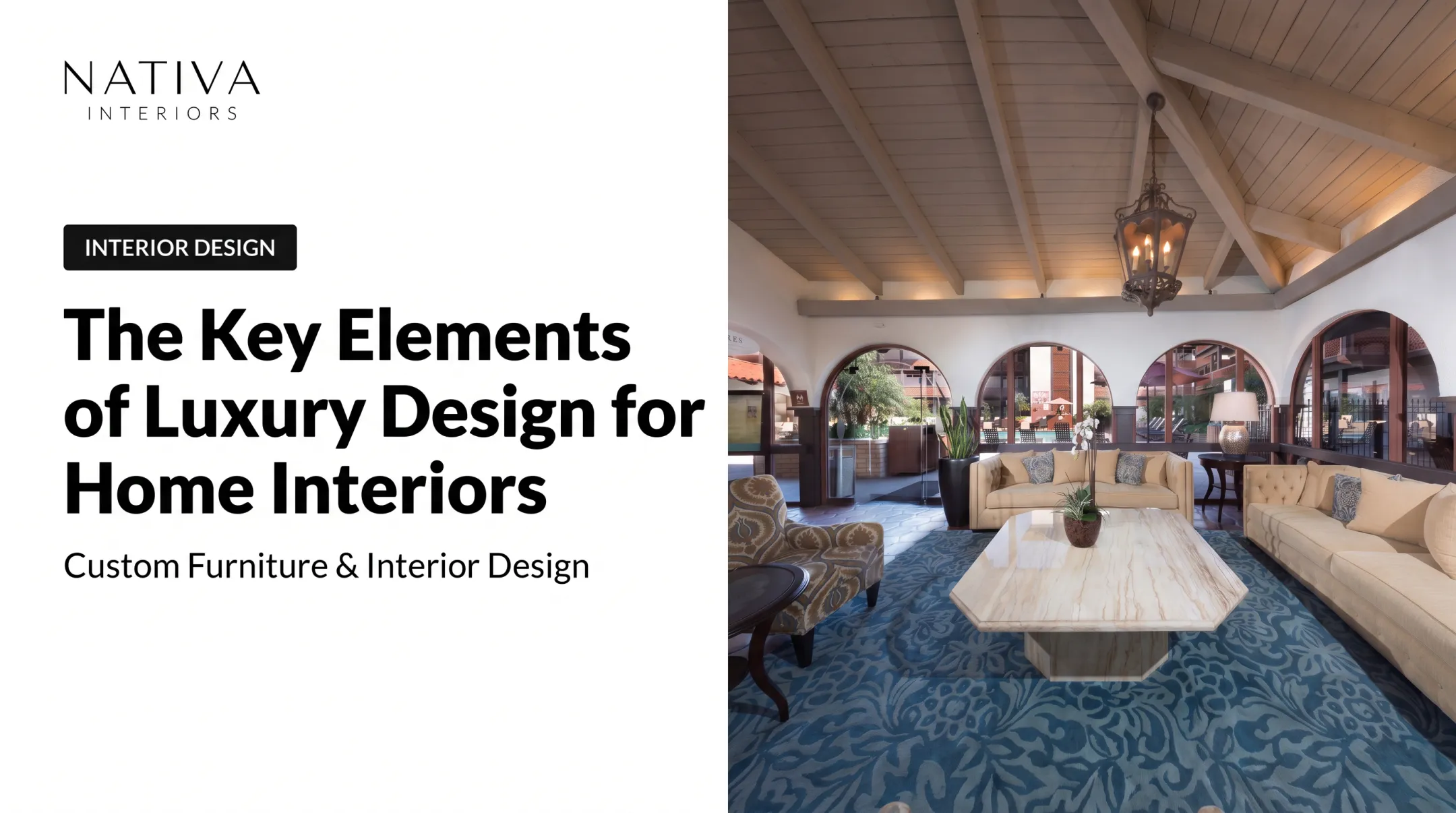
True luxury interior design combines exceptional materials, skilled craftsmanship, intentional planning, comfort, and personalization into something that feels considered rather than assembled. Done well, it reads as a lived experience shaped around daily life.
This guide breaks down what luxury interior design actually means and the core elements that separate it from expensive decorating. It also covers what a luxury designer does day-to-day, and how these principles apply whether you're refreshing a bedroom or outfitting a boutique hotel.
Key Takeaways
- Luxury interior design prioritizes quality, personalization, and function over any single decorating style
- Proportion, lighting, texture, and craftsmanship often matter more than the price tag on individual pieces
- A luxury designer coordinates vision, materials, and execution into one cohesive experience
- Quiet luxury, sustainable materials, and made-to-order furnishings are current directions worth understanding, not universal rules
What Is Luxury Interior Design?
Luxury interior design is a design-led process that creates refined, highly personalized spaces through superior craftsmanship, intentional material selection, careful space planning, and close attention to how a room feels and functions. Purpose sits behind every object, finish, and layout decision.
Interior design as a formal discipline goes well beyond picking finishes. According to the Council for Interior Design Qualification (CIDQ), interior design is a distinct profession. Practitioners use specialized knowledge to plan environments for health, safety, and human experience, covering space planning, durable material selection, lighting, acoustics, and project management.
That distinction matters. Decorating focuses on surface-level aesthetics: paint, accessories, styling. Design addresses the bones of a space, then builds the beauty on top of a functional foundation.
Luxury Isn't One Look
Here's where a lot of people get tripped up. Luxury doesn't have a single aesthetic signature.
A minimalist Scandinavian living room can be just as luxurious as a maximalist, jewel-toned dining room, when both share the same underlying qualities:
- Proportion that suits the architecture and the people using the space
- Durability that holds up to real life, not just a photo shoot
- Comfort that's felt, not just implied
- Cohesion across materials, colors, and furnishings
- Exclusivity, whether through custom pieces or limited-run materials

Modern, traditional, transitional, eclectic. Any of these can read as luxurious when the execution is intentional.
Experiential Luxury Matters Most
Some of the most luxurious details in a home aren't visible at all. Acoustics that dampen street noise. Natural light that shifts gracefully throughout the day. Storage that disappears into millwork instead of cluttering a closet.
For Nativa Interiors, luxury starts with how a space feels to live in day after day. A home can look stunning in photos and still feel uncomfortable to inhabit. The reverse, understated but deeply livable, is where genuine luxury tends to show up.
The Essential Principles and Elements of a Luxury Interior
Six elements consistently separate a luxury interior from an expensive one. None of them are about price alone.
Material Selection
High-quality materials perform well and age gracefully. This includes natural stone, hardwoods, premium metals, fine textiles, leather, and glass.
Wood species vary significantly in durability. The National Wood Flooring Association notes that the Janka Scale measures a species' resistance to dents and dings. Quality wood flooring holds up well even under busy household traffic. Origin, maintenance requirements, and suitability to the space matter more than sticker price.
Custom and Heirloom-Quality Furnishings
Furniture built for a specific room outperforms furniture bought to fit a generic space. Custom dimensions, tailored upholstery, and built-ins solve real problems: an awkward alcove, a too-narrow hallway, a sofa that needs to seat six comfortably instead of four.
Nativa Interiors' custom furniture, for example, is handcrafted in North America using materials such as solid walnut, eco-friendly upholstery, and quality foam construction. Dimensions, fabric, and finish adjust to the client's space and lifestyle.
Proportion and Spatial Planning
A room can be filled with beautiful things and still feel wrong if the scale is off. Luxury design pays close attention to:
- Furniture scale relative to room size and ceiling height
- Clear circulation paths and sightlines
- Negative space that lets key pieces breathe
- Focal points that draw the eye intentionally
Editing matters as much as adding. A room with fewer, better pieces almost always reads as more expensive than one crammed with options.
Layered Lighting
Lighting shapes mood more than almost any other design element. Lutron describes three layers working together: ambient lighting as the base, task lighting for function, and accent lighting as the finishing touch.
A room without this layering feels flat, regardless of how nice the furniture is.
Texture, Color, and Contrast
Depth comes from contrast: warm woods against cool stone, soft textiles against polished surfaces, a controlled neutral palette punctuated by one or two intentional accent tones. That contrast is what reads as sophisticated, and it costs far less than people assume.
Curated Art and Personal Objects
Meaningful pieces beat generic decoration every time. A single piece of art with personal significance does more for a room than five decorative objects chosen because they matched a color scheme.

What Does a Luxury Interior Designer Do?
A luxury interior designer's job starts long before fabric swatches or furniture catalogs enter the picture.
Discovery Comes First
The best designers ask questions before they suggest anything. How do you entertain? Do you work from home? Does your family gather in the kitchen or the living room? These conversations shape the design brief and prevent expensive missteps later.
Creative and Technical Responsibilities
Once the brief is set, a designer's work splits into two tracks that run in parallel:
Creative work includes:
- Developing the overall concept and palette
- Planning layouts and traffic flow
- Selecting materials, finishes, and lighting
- Sourcing furnishings that fit the vision
Technical and coordination work includes:
- Producing measurements and specifications
- Communicating with architects, contractors, and artisans
- Managing lead times, samples, and finish approvals
- Overseeing quality control and delivery logistics
The NCIDQ job-task analysis confirms this scope, listing feasibility studies, schedules, budgets, procurement, and site observation as core professional competencies, not add-ons.
Where Expertise Actually Shows Up
- Correctly scaled furniture
- Integrated storage that doesn't scream "storage"
- Window treatments tailored to a specific window's proportions, not a standard size off a shelf
These small decisions compound into a space that functions as well as it looks.
Nativa Interiors pairs designers with its own manufacturing capability. Custom furniture, full-service interior design, and personalized service run through a single point of contact from concept through completion, rather than being outsourced across multiple vendors.
Applying Luxury Design to Different Spaces and Styles
Luxury principles shift depending on the room, but the underlying goals stay consistent: comfort, function, and intentional craftsmanship.
Room-by-Room Priorities
- Living rooms balance conversation-friendly layouts with real comfort—not just visual symmetry
- Bedrooms prioritize rest through tactile softness, quiet palettes, and low-glare lighting
- Kitchens support cooking and entertaining at once, with durable surfaces that still look refined
- Bathrooms work best as private wellness retreats built for slowing down, not rushing through
Beyond the Home: Hospitality and Commercial Spaces
Hotels, restaurants, and other public interiors face stricter demands: visual identity must hold up against durability, traffic flow, and daily operations. Nativa Interiors' commercial work—including projects for the Arizona Biltmore, La Jolla Shores Hotel, and Pacific Coast Grill—balances hospitality-grade performance with design that still feels warm and considered.
Quiet Luxury vs. Expressive Luxury
Those same priorities play out in two broad style directions. Not every luxurious space whispers. Martha Stewart describes quiet luxury as understated opulence: neutral colors, classic silhouettes, and quality materials over visible branding. Expressive luxury takes the opposite route—bold color, sculptural furniture, and statement materials.
Neither is more legitimate. Both can be intentional, well executed, and unmistakably luxurious when the space, materials, and use pattern agree.
Applying This at Any Budget
Prioritize in this order:
- Layout and spatial planning
- Lighting
- Comfort and seating quality
- A small number of high-impact, well-made pieces
- Decorative extras last

No single product or paint color creates a luxury result on its own. Get the plan, light, and comfort right first, then let a few well-made pieces carry the finish.
How Nativa Interiors Approaches Bespoke Luxury
Nativa Interiors is a Southern California luxury furniture and interior design firm founded in 2001 by Silvina Petrate. Her Argentine roots and appreciation for craftsmanship, culture, and natural materials still guide how the firm designs and builds.
The firm operates as a vertically integrated design business. In-house designers and manufacturing teams work side by side, so bespoke, made-to-order furnishings, custom finishes, and pieces tailored to a client's lifestyle stay under one roof rather than moving through outside vendors.
With 25 years of interior design and furniture expertise, Nativa Interiors works across residential, commercial, hospitality, and home staging projects throughout Southern California.
The company's approach combines three elements:
- The Nativa Interiors Furniture Collection, designed in-house and handcrafted in North America using sustainable materials
- Curated global brands, including American Leather, Gamma, Stressless, and Lee Industries
- North American manufacturing, supporting customization without the long lead times common to overseas production
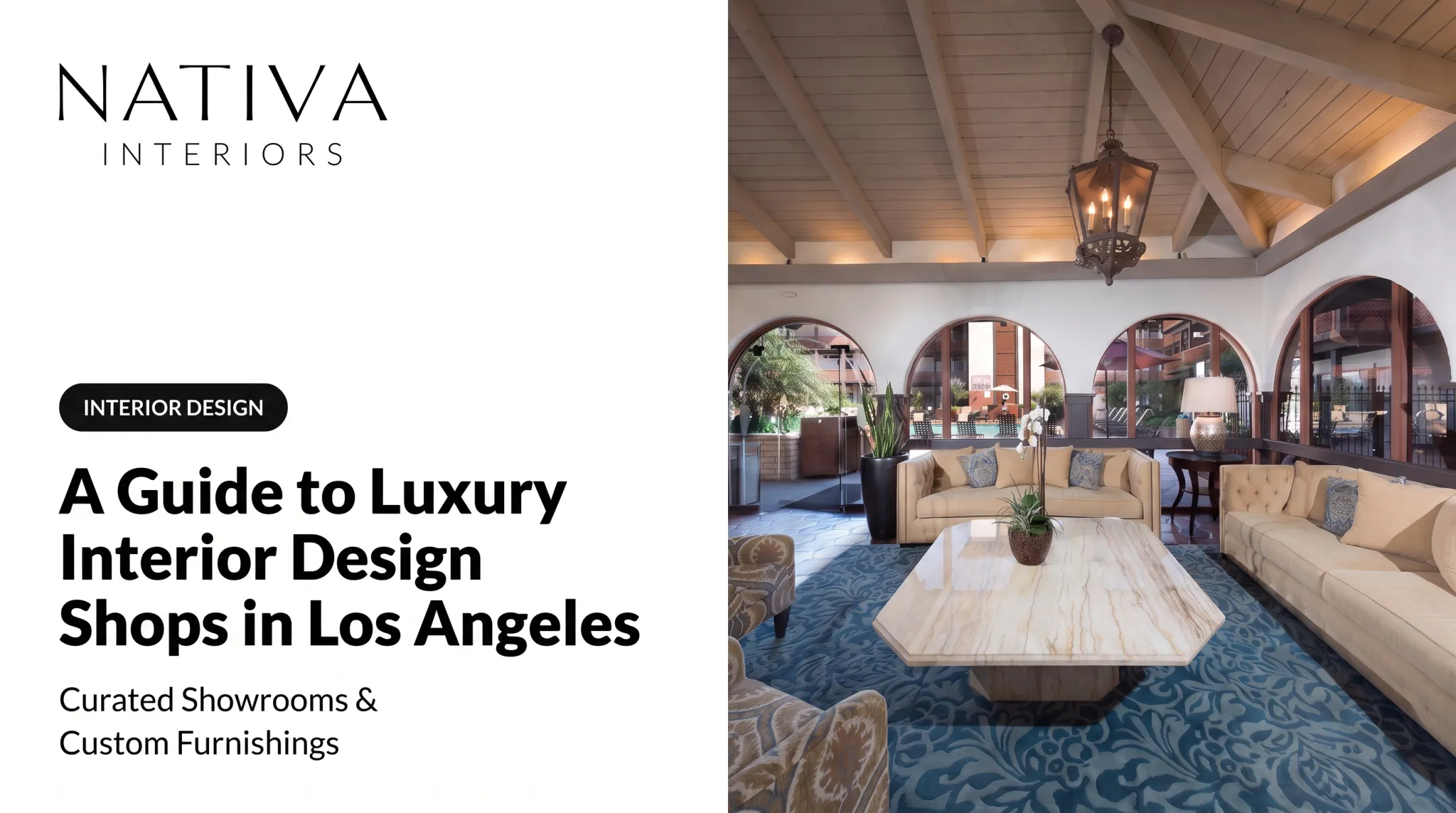
Homeowners and businesses exploring a design project can visit Nativa Interiors showrooms in La Jolla, Solana Beach, and Newport Beach to see materials and finishes firsthand and talk through a space in person.
Frequently Asked Questions
What does a luxury interior designer do?
A luxury interior designer handles discovery, space planning, materials and furniture, customization, sourcing, and coordination from concept through installation—guiding both the creative vision and the technical build-out.
What is luxury interior design?
It's a design approach built on quality materials, skilled craftsmanship, personalization, and thoughtful spatial planning rather than price alone. The goal is a cohesive space that both looks and feels exceptional.
What are the latest trends in luxury interiors?
Current directions include quiet luxury, wellness-focused rooms, natural and sustainable materials, layered lighting, and custom furnishings, with technology kept discreet. Treat these as signals, not fixed rules—trends shift.
What color makes a house look expensive?
No single color makes a house look expensive. Cohesive undertones, rich neutrals, and finish quality matter more than hue, and color should support the architecture and furnishings—not compete with them.
What are some luxury interior design brands?
Luxury brands span furniture makers to textile houses. Judge craftsmanship, materials, customization, and service over name recognition—Nativa Interiors’ collection and curated lines like American Leather and Stressless are chosen on that bar.
What is the 15% rule in decorating?
This phrase is used inconsistently across the design world and isn't a recognized professional standard. Some designers use it to describe leaving a room intentionally unfinished for later sourcing. Verify the context before applying it, and prioritize proportion and personal needs instead.