
Many homeowners struggle to pin down what "contemporary" even means versus "modern." The terms get used interchangeably online, which only adds to the confusion when you're trying to plan a renovation or furnish a new space.
This article clears that up. We'll define both terms, break down the essential elements of a contemporary interior, cover what's trending in 2026, and give you a practical roadmap for bringing the look home.
Key Takeaways
- Contemporary shifts with today’s materials and technology; modern is a fixed 20th-century movement.
- The best contemporary interiors balance clean lines with warmth, texture, and personal touches.
- Prioritize quality and function over chasing every trend.
- Layer a neutral base with lighting, sculptural furniture, and art for depth without clutter.
What Is Modern Contemporary Interior Design?
Contemporary interior design isn't a fixed formula. It's a flexible, present-focused approach that blends whatever influences feel relevant right now, whether that's minimalist, organic, vintage, or tech-forward.
That's the whole point. Contemporary design in 2026 looks different than it did in 2015, because it responds to shifting materials, technology, and lifestyle expectations rather than a locked-in rulebook.
Modern vs. Contemporary: What's the Real Difference?
Here's where most people get tripped up. According to Architectural Digest's guide to contemporary interior design, modern design draws from a defined historical period, specifically the Bauhaus and Scandinavian movements. It carries an established visual vocabulary of streamlined silhouettes and geometric forms.
Contemporary design, by contrast, blends whatever styles are trending at the moment. It's fluid by nature.
- Modern: A specific historical reference point with established rules
- Contemporary: An evolving, trend-responsive approach with no single fixed identity
Both styles share clean lines, restrained ornamentation, and a focus on light and function. The difference comes down to history versus flexibility.
A Contemporary Home Doesn't Have to Feel Cold
A common misconception is that contemporary means stark or futuristic. It doesn't. The best contemporary spaces include:
- An uncluttered layout with clear circulation
- A neutral or nature-inspired palette
- A handful of high-impact furnishings, not a room full of statement pieces
- Mixed textures for tactile warmth
- Strong, layered lighting
- Art and objects that feel personal, not generic
Nativa Interiors describes its own approach as blending global design influences with modern sophistication, using rich woods, woven textiles, and stone to add warmth and authenticity. That's the balance contemporary design is really after: refined, but still yours.
Key Elements of Modern Contemporary Interiors
Every contemporary interior, no matter the specific aesthetic, shares a handful of structural building blocks.
Open Space and Purposeful Sightlines
Open layouts are the backbone of the contemporary look, and buyer demand backs that up. A National Association of Home Builders study found that 70% of buyers wanted a completely or partially open kitchen-family-room layout, while 86% wanted an open kitchen-dining arrangement.

Can't remove walls? You don't have to.
- Use a consistent color palette across adjoining rooms
- Align furniture to create clear visual pathways
- Swap solid doors for glass or open archways where possible
Clean Lines Without Emptiness
Streamlined furniture and architectural simplicity define the contemporary silhouette, but there's a difference between intentional restraint and a room that just feels bare. A contemporary room should feel edited, not empty.
Keep the silhouette simple without stripping the room:
- Choose low-profile sofas and tables with quiet, continuous lines
- Hide clutter behind closed storage and integrated hardware
- Limit surfaces to a few intentional objects, not full displays
Color Strategy: Neutral Base, Controlled Contrast
Start with a warm neutral: warm white, taupe, greige, clay, or sand. Then add contrast through:
- One statement art piece
- Darker cabinetry or millwork
- A single, controlled accent color
- Rich textiles
Avoid scattering unrelated colors around the room. Contrast should feel deliberate.
Layered Texture and Furniture as Composition
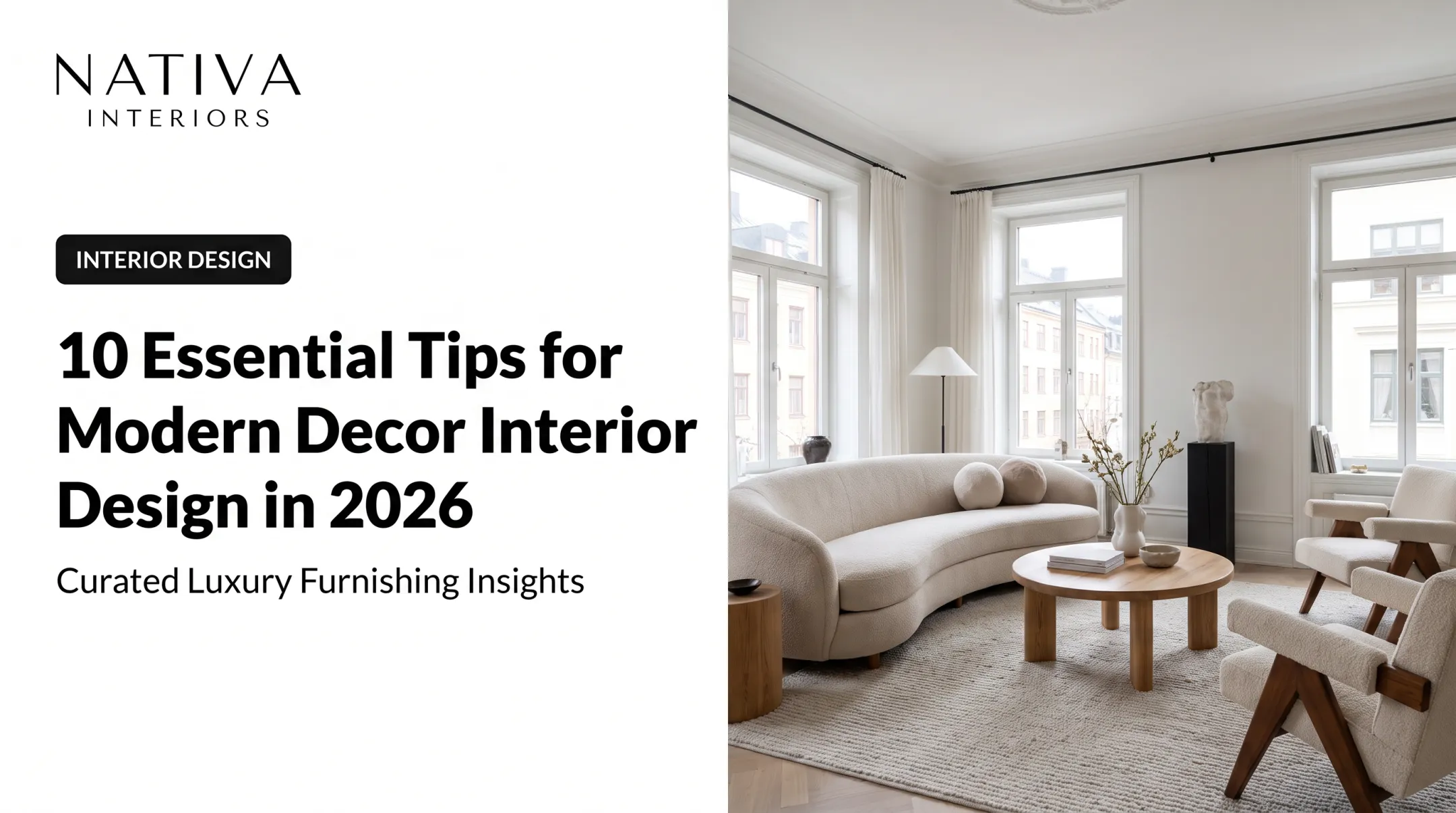
Flat neutrals read as clinical without texture. Combine wood, stone, linen, wool, leather, metal, and ceramics to add depth. Furniture should do double duty, functioning well and looking sculptural. Nativa's Lucerne Sofa illustrates this: off-white textured fabric, taupe leather-wrapped armrests, and oversized cushions that feel both comfortable and composed.
Layered Lighting
Ambient, task, and accent lighting each play a distinct role, and skipping one leaves a room feeling flat or harsh. Build the mix in three layers:
- Ambient: general illumination that evenly lights the room
- Task: focused light at work surfaces, reading chairs, and counters
- Accent: softer light that adds mood and highlights texture or art
A statement pendant or sculptural chandelier can anchor the scheme without overwhelming it—Nativa often pairs branch-and-leaf fixtures with quiet seating so the light reads as form, not clutter.
Art, Greenery, and Personal Objects
Choose fewer, more meaningful pieces and give them breathing room. One oversized painting usually beats five small ones crowding a wall.
Greenery works as living sculpture: a single sculptural tree or a few large-leaf plants softens hard edges better than scattered tiny pots. Personal objects belong when they carry a story—edit ruthlessly so each piece has space to register.
Contemporary Interior Design Trends to Watch in 2026
Think of these as current directions, not permanent rules. Trends shift; good bones don't.
Warm Minimalism Is Winning
The stark, all-white minimalism of a decade ago is softening. Designers are leaning into earthy hues, tactile surfaces, and organic materials such as textured plaster, warm stone, and darker wood tones. The aim is contemporary rooms that feel calm without reading as sterile.
Curves Are Everywhere
Rounded forms are showing up in sofas, tables, lighting, and headboards. According to ELLE Decor's 2026 furniture trend coverage, clients are actively requesting sofas with rounded backs, flared arms, and scalloped bases. Curved sectionals pull people inward, and oval dining tables reduce the "head of the table" hierarchy.
Nativa's Neelam Sofa, with its curved back and flared arms, reflects this shift.

Sustainable, Built-to-Last Furniture
Investing in fewer, higher-quality pieces supports a longer design life than chasing fast-furniture trends. Look for:
- Responsibly sourced or certified wood
- Domestic or North American production
- Made-to-order craftsmanship over mass production
Since 2001, Nativa Interiors has built its handcrafted collection around FSC-certified or responsibly harvested wood and low-VOC, water-based finishes.
Flexible, Tech-Aware Spaces
Modular furniture that reconfigures easily is gaining traction as households ask rooms to do more. American Leather's modular, performance-focused pieces are a good example, built for adaptable living without sacrificing comfort.
Expressive Restraint
Oversized artwork, sculptural lighting, and one distinctive furniture piece within an otherwise calm room create impact without visual noise. Keep the backdrop quiet so that single move can carry the room.
Is Gray Being Replaced?
Not exactly. Paint brands are leaning warmer for 2026, but that doesn't mean gray is obsolete. Gray still works beautifully layered with warm wood, textiles, and the right lighting. The real shift is toward warmer, layered neutrals overall, not a wholesale rejection of gray.
How to Bring Modern Contemporary Style Into Your Home
Start with what you have: your architecture, natural light, room proportions, and daily routines. Write a short design brief before buying anything.
Follow this sequence:
- Edit clutter: Remove what doesn't serve the space or your daily life.
- Establish a base palette: Pick two or three tones and stick to them.
- Choose one focal point: A sofa, art piece, or lighting fixture that anchors the room.
- Layer materials and lighting: Add texture and depth in stages.
- Add personal touches last: Art, objects, and greenery come after the foundation is set.
Balance pieces you can refresh with pieces you keep:
- Swap-friendly: throw pillows, lighting, accessories
- Long-term investments: sofa, dining table, bed frame
Before you buy, check:
- Scale and negative space
- Comfort and daily use
- Storage needs
- Material performance
Getting scale and materials right the first time is harder than it looks. That is where a coordinated design team helps.
Nativa Interiors builds furniture around a client's space, proportions, materials, and lifestyle. Its vertically integrated model keeps concept development, custom manufacturing, and installation under one team—so fit and finish stay aligned from plan to placement.
Room-by-Room Applications
Contemporary principles stay consistent room to room, but comfort, durability, and focal emphasis change with how the space is used.
Living room: Pair a comfortable modular or sculptural sofa with a restrained rug, layered lighting, and one strong focal point. That anchor can be an abstract art piece or a striking coffee table.
Kitchen and dining area: Prioritize uncluttered cabinetry, durable countertops, and statement lighting over the island. Nativa's Ocean 17 project pairs dark wood cabinetry with a white island and three glowing pendants to create that visual continuity.

Bedroom and bathroom: Keep it restful. Use tactile textiles, dimmable lighting, and curved or upholstered elements like a channel-tufted headboard rather than sharp, cold surfaces.
Outdoor and commercial spaces: Durability, flow, material cohesion, and purposeful lighting translate directly to patios, restaurants, and hospitality lobbies. Nativa's commercial projects with La Jolla Beach and Tennis Club and Pacific Coast Grill show how those choices scale beyond the home.
Frequently Asked Questions
What's the difference between contemporary and modern interior design?
Modern refers to a specific historical design movement rooted in Bauhaus and Scandinavian influences. Contemporary describes the current, always-changing design landscape. Both favor clean lines and functional design.
What is a contemporary interior design style?
Contemporary style mixes current forms, materials, colors, and technology. Simplicity and intentional composition matter more than any fixed rulebook.
What does a contemporary style home look like?
Expect open or visually connected spaces, clean lines, restrained colors, and mixed textures. A few expressive furnishings or artworks carry the room—not heavy ornamentation.
What are some good contemporary home decor ideas?
Layer your lighting, choose sculptural furniture, add warm textures, and select one or two meaningful art pieces. Greenery and concealed storage finish the look without adding clutter.
What is the 2026 decorating style?
There's no single official 2026 style. Current directions include warm minimalism, organic materials, flexible room layouts, and expressive accents balanced against a calm base.
What color is replacing gray?
Warmer neutrals, like clay, sand, olive, and softened off-whites, are gaining ground. Gray isn't disappearing; it works best when layered with warm materials and thoughtful lighting.