
Many homeowners struggle with the opposite problem: rooms that look polished in photos but feel stiff to actually live in. Others end up with a mismatched mix of trend purchases that never quite gel. Interest in organic modern interiors alone rose nearly 3.5x year-over-year for bedroom searches in 2024, according to Houzz's Emerging Summer Trends Report, showing just how fast preferences shift.
This guide breaks down what modern elegance actually means, the four major styles within it, how to choose between them, and the mistakes worth avoiding before you buy.
Key Takeaways
- Modern elegance blends streamlined silhouettes, quality materials, and restrained detail rather than a single furniture category.
- Four styles dominate the space: contemporary modern, mid-century modern, modern minimalist, and modern organic.
- Room architecture, lifestyle, and maintenance tolerance should drive your choice, not trend reports.
- A consistent palette and finishes, paired with one or two focal pieces, creates a cohesive room.
What Is Modern Elegance Furniture?
Modern elegance furniture earns its polish through proportion, material quality, and craftsmanship, not heavy ornamentation. It is restraint done well: a sofa with a tailored silhouette rather than one dressed up with excess trim.
The visual foundations tend to repeat across pieces:
- Clean or gently sculpted lines
- Neutral or restrained color palettes with occasional depth
- Tactile upholstery in leather, wool, or performance fabrics
- Natural materials like solid wood, stone, or marble
- A deliberate balance between solid forms and open, airy space
Nativa Interiors' La Jolla Credenza is a good real-world example: a minimalist silhouette paired with artisan-grade materials at 53"W x 19"D x 31"H, so it reads as sophisticated rather than plain. Similarly, the Donte Dining Chair combines plush, premium upholstery with sleek lines and subtle curves that read modern in shape and elegant in finish.

Flexible Mixing Across Styles
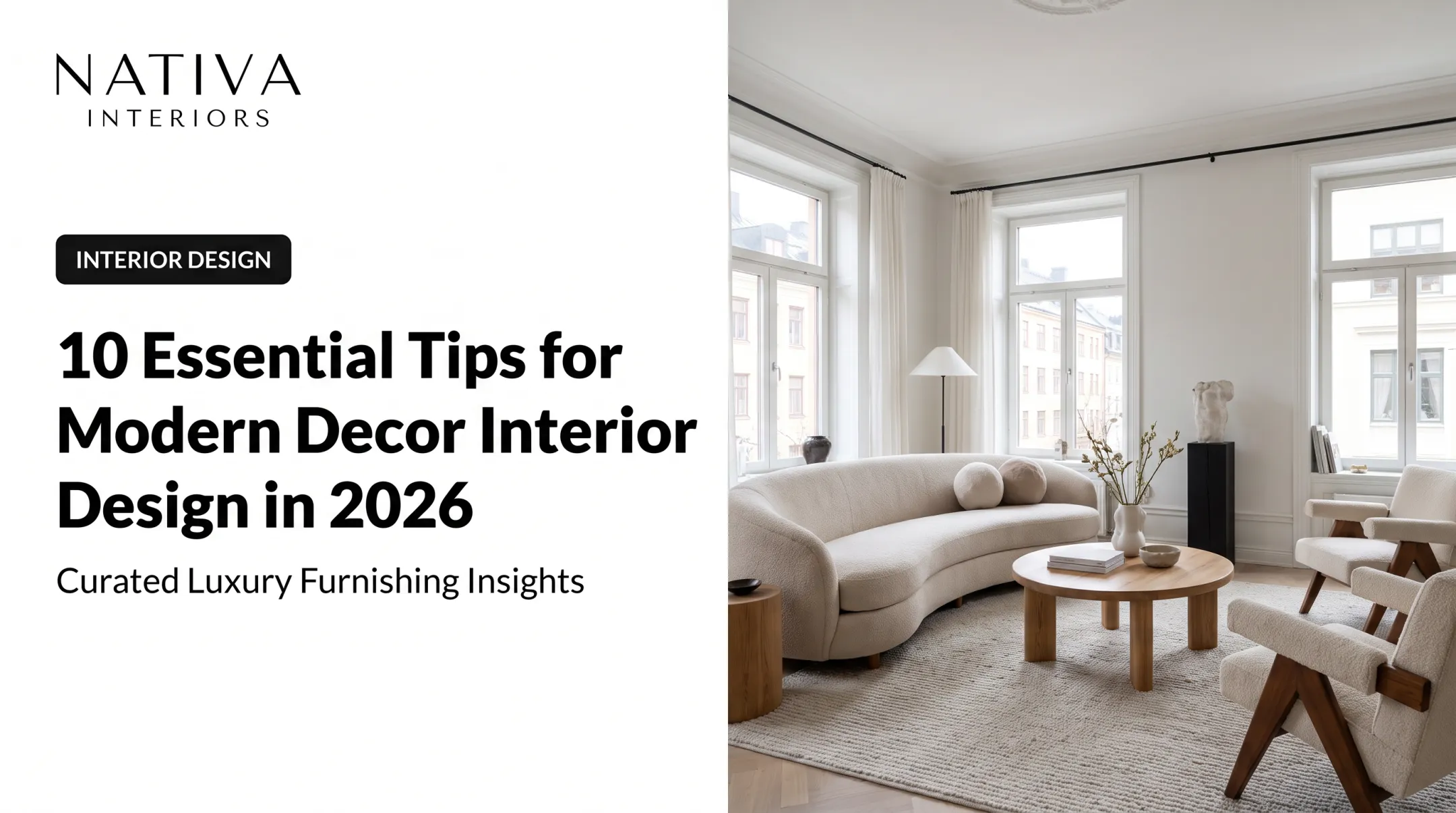
Modern elegance does not require locking into a single style. A living room might pair a mid-century-inspired lounge chair with a contemporary console and an organic-textured rug.
Shared wood tones, a controlled palette, and comparable scale keep the mix intentional. That is why the Revolution Sofa and Carmen Console are designed to work in both classic and modern settings.
Why Is Modern Elegance Important in Interior Design?
A well-edited room is easier to live in, easier to clean, and more adaptable when your needs change. A home office can become a nursery, or a dining room can seat twelve for the holidays, without a full redesign.
Comfort and function are what keep modern elegance from feeling sterile. That means:
- Supportive seating that doesn't sacrifice comfort for a dramatic profile
- Useful storage that keeps surfaces clear without hiding everything you need daily
- Durable surfaces that hold up to real use, not only staged photos
- Appropriate scale so furniture fits the room instead of overwhelming it
Nativa's Ayla Danish Chair illustrates this well: it is ergonomically shaped for genuine comfort and built from materials meant to last beyond day one. The Nova Sideboard does similar work in storage, with adjustable shelving and a spacious interior that keeps a dining room clutter-free.
Those pieces only pay off, though, when the whole room follows one clear direction.
What Goes Wrong Without a Clear Direction
Without a consistent design approach, rooms tend to accumulate:
- Mismatched proportions (an oversized sofa in a small living room)
- Too many competing finishes, such as three wood tones and two metals in one space
- Trend-driven purchases that feel dated within a year
- Furniture that photographs well but is genuinely uncomfortable to sit on
Types of Modern Elegance Furniture Styles
Modern elegance isn't one-size-fits-all. The four styles below share an emphasis on thoughtful design, but they differ in warmth, ornamentation, and historical influence.
Contemporary Modern Furniture
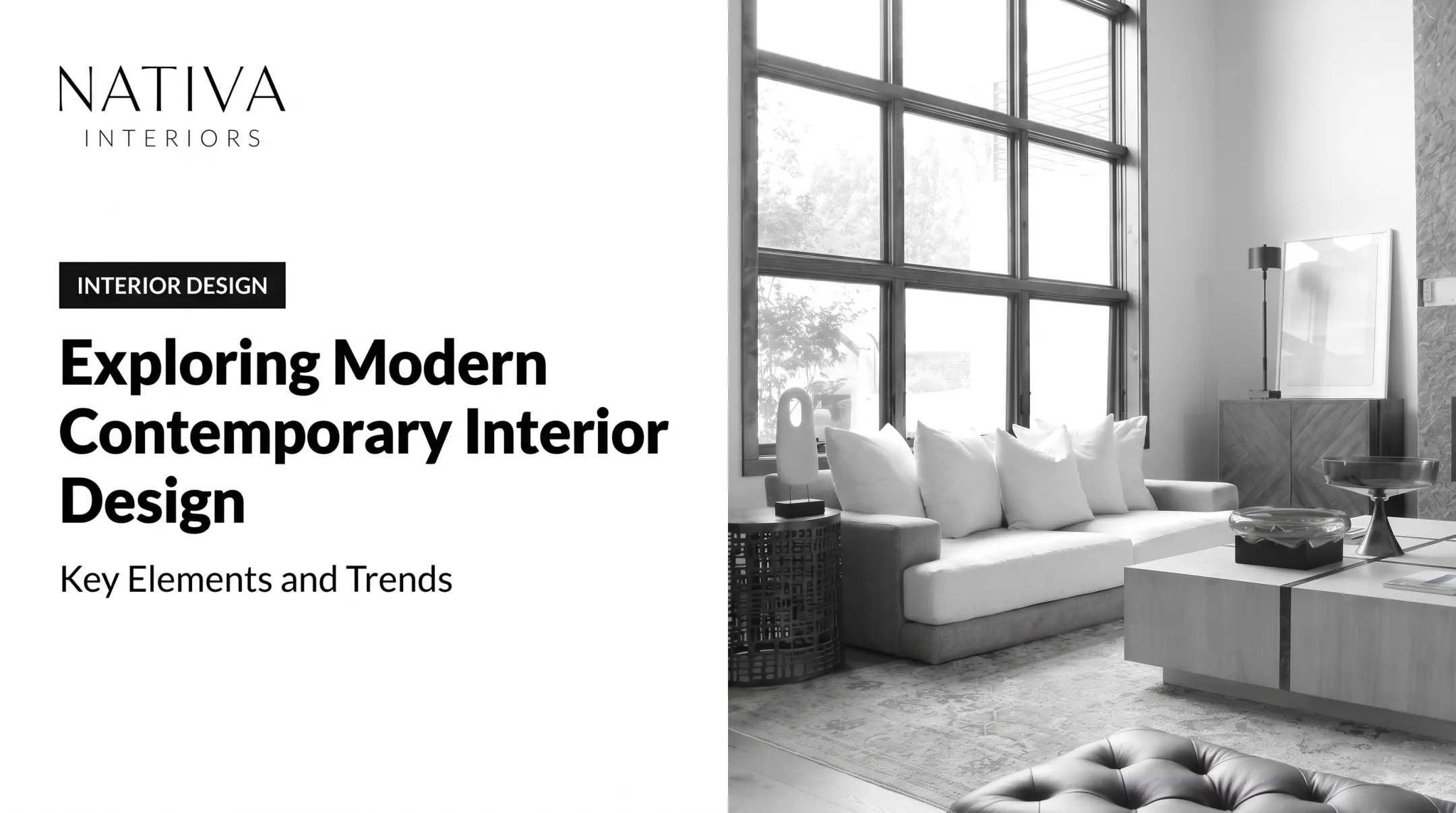
Contemporary modern furniture reflects current preferences rather than a fixed period.
According to Elle Decor's distinction between contemporary and modern design, contemporary style favors neutral palettes, clean lines, and organic silhouettes. Materials often mix nickel, steel, and chrome with natural textures such as hemp or jute.
You'll typically see:
- Neutral upholstery with occasional bold accent pieces
- Polished or matte metal finishes
- A mix of wood, glass, and sculptural forms
The Jet Leather Sofa, a minimalist cream-toned two-seater with rounded arms and a slim dark-wood platform base, captures this well. It's clean without being cold.
Best for: open-plan living spaces and homeowners who want a look that can evolve through accessories rather than a full furniture overhaul.
Trade-off: an overly uniform selection, or too many hard surfaces, can make a room feel impersonal. Balance metal and glass with at least one soft, tactile element.
Mid-Century Modern Furniture
Mid-century modern is defined by functional forms: tapered or angled legs, organic curves, and a tight relationship between structure and purpose.
Museum records from Cranbrook Art Museum trace these forms back to designers such as Eero Saarinen and Charles Eames, whose work still shapes the look today.
Warmth comes from:
- Rich wood tones and leather upholstery
- Wool or textured fabric seating
- Occasional brass or black metal accents
Nativa's Fortune Tufted Sofa shows the formula clearly: a streamlined rectangular frame, subtle button tufting, and tapered wood legs. The Ind Mid Century Leather Lounge Chair adds Gold Pewter leather, angled arms, and brass nailhead trim for character without clutter.
Best for: living rooms, dining areas, and home offices that need personality without heavy decoration.
Trade-off: lean too hard into vintage-inspired forms across every piece, and a room can start to feel like a themed set rather than a home.
Modern Minimalist Furniture
Minimalist furniture is intentionally edited. Architectural Digest's guide to minimalist interiors describes it through clean lines, limited ornamentation, neutral color, and natural materials, with function doing the heavy lifting rather than decoration.
Common elements include:
- Low-profile seating with simple silhouettes
- Built-in or concealed storage
- Tonal upholstery in one or two colors
- Uncluttered layouts with generous negative space
Best for: smaller rooms, architecture-led spaces, and households that value order and low-maintenance living.
Trade-off: minimalism still needs texture and comfortable proportions. Strip those away and a room reads as stark or impractical rather than calm.
Modern Organic Furniture
Modern organic furniture blends contemporary simplicity with natural warmth: softened shapes, visible wood grain, earthy tones, and tactile materials.
Designers continue to request it for projects that want modern clarity without a cold, hard-edged feel.
Materials to expect:
- Natural wood with visible grain
- Linen, wool, or bouclé-style upholstery
- Rattan or woven textures
- Curved seating and handcrafted-looking details
Nativa's Console Tables Collection leans into this with a sculptural piece featuring a distressed stone-like top, natural wood inlay, and an organic, irregular form.
Best for: relaxed luxury homes, coastal interiors, and living or dining spaces where comfort matters as much as visual refinement.
Trade-off: too many natural textures or irregular forms can soften the crispness that makes it feel "modern" in the first place. Keep the palette and silhouettes edited.

How to Choose the Right Style of Modern Elegance Furniture
The right style depends on your home, your lifestyle, and how you actually use each room, not whichever look is trending on social media this month.
Factors to Consider
- Assess the space first. Look at architecture, room dimensions, natural light, existing flooring, and sightlines. Furniture should complement the room, not compete with it.
- Define the mood you want. Polished and current? Warm and inviting? Calm and pared-back? Character-rich and nostalgic? Let that mood point you toward a style.
- Prioritize lifestyle needs. Entertaining frequency, kids or pets, lounging habits, storage requirements, and how much upkeep you're realistically willing to do all matter more than aesthetics alone.
- Check scale and proportion before you commit. Architectural Digest notes that scale and proportion are fundamental to a balanced room. Verify seat depth, table height, and clearance at doorways and walkways.
- Decide between ready-made, curated, or custom. A statement piece might be all you need. A full room might call for a coordinated collection.
If custom is the right path, Nativa Interiors builds made-to-order furniture around your room, lifestyle, and daily routine. Collaborative consultation, material selection, and white-glove delivery are part of the process, with production typically running 6 to 8 weeks plus shipping.
What to Check Before Finalizing a Style
Before committing to a premium purchase, run through a few practical checks. Fashionable isn't the same as functional, and it's easy to fall for a piece that won't actually work in your space.
Review these before you order:
- Construction quality, joinery, and upholstery performance
- Finish durability and material sourcing
- Care requirements (some finishes need specific products, not generic polish)
- Lead times and customization options
- Whether the piece works with your home's existing architecture and furnishings
Build a simple finish plan first. Limit yourself to two competing wood tones and one metal finish per room. Measure the actual space, not a rough guess. Then test comfort, texture, and color in your home's real lighting; showroom lighting can be misleading.
Common styling mistakes to avoid:
- Buying a complete matching set instead of layering pieces
- Mixing too many unrelated silhouettes in one room
- Leaving no visual contrast between textures or tones
- Sacrificing comfort for a dramatic but impractical profile
If you want finish flexibility without locking into one look, pieces like the Barcelona Credenza (available in Alder Walnut, Alder Smoke, Alder Maple, or Alder Grey) complement both modern and traditional interiors.

Conclusion
Modern elegance comes down to the relationship between form, function, comfort, materials, craftsmanship, and personal expression. It's never been about locking into one fixed furniture style.
Build from a few clear moves:
- Pick a coherent style foundation
- Layer in complementary textures
- Add one or two focal pieces
When the project involves custom furniture, multiple rooms, or a full interior overhaul, professional design support can save you from expensive trial and error. Consultations at Nativa Interiors' San Diego and Orange County showrooms help you get those decisions right the first time.
Frequently Asked Questions
What is the most popular furniture style right now?
Contemporary modern, modern organic, and mid-century-influenced furniture lead current demand. Choose what fits your home, comfort needs, and taste—not the trend of the moment.
Can I mix modern elegance styles in one room?
Yes. Shared color palette, material quality, and scale let a mid-century chair and a contemporary sofa work well in the same room.
How do I know if a piece will feel comfortable, not just stylish?
Check seat depth, cushion firmness, and back support in person when you can. A 20–22 inch seat depth suits most upright sitting, though your height changes the ideal fit.
Is custom furniture worth it for modern elegance interiors?
Custom furniture makes sense when you need exact dimensions, specific finishes, or a piece that ties an entire room together. Ready-made works fine for simpler needs or faster timelines.
Does modern organic furniture work in small spaces?
Yes, if you keep the palette and silhouettes edited. Too many natural textures in a small room can feel cluttered instead of calm.